Health Coach, Holistic Nutrition, Weight Loss Expert | Cheryl Giambattista
  • HOME
  • About
    • Health Coach Cheryl
    • My Story
  • My Programs
    • Simple Swaps
    • Coaching For Families
  • Blog
  • Clean Beauty
  • My Favourite Supplements
  • Praise
    • Success Stories
    • Press
  • Contact

Health News

How Can I Get Enough Vitamin D?

Comments

 
Picture

When We Think Of Vitamins...

...we know they're super important for our health. 

But vitamin D is special.

It's difficult to get enough vitamin D. Vitamin D is, therefore, a very common deficiency. We're lucky at the moment, as one of the easiest ways to get vitamin D is through sun exposure! Since it's currently summer and is very sunny in many places around the world, this is not a particularly difficult task right now. However, once winter rolls around, or for people who live in less sunny climates, things get a little more complicated!

So, let's talk about how much of this critical, fat-soluble vitamin we need, and how we can get enough of it. Without a doubt, the three best ways to get vitamin D are exposure to the sun, consuming vitamin D containing food, and through supplements. Keep reading to find out more about this fascinating vitamin!
Picture

Why & How Much?

Vitamin D helps us absorb calcium from our food and acts like a hormone to help us build strong bones. Vitamin D can also help with immune function, cellular growth, and help to prevent mood imbalances such as depression and seasonal affective disorder.

Not getting enough vitamin D can lead to bone diseases like osteomalacia. Inadequate vitamin D can also increase risk of heart disease, autoimmune diseases, certain cancers, and even death. The official minimum amount of vitamin D to strive for each day is merely 400-600 IU. However, many experts think that this is not nearly enough for optimal health.

To ensure we get adequate amounts of vitamin D, we can implement any combination of the three vitamin D sources mentioned below on a weekly basis.
Picture

How Can I Get Enough From The Sun?

Our skin produces vitamin D when it's exposed to the sun, that's why it's referred to as the sunshine vitamin. The amount of vitamin D our skin can produce depends on many factors such as location, season, clouds, and clothing.

​One standard recommendation is to get about 5–30 minutes of sun exposure between 10:00 a.m.-3:00 p.m. to the face, arms, legs, or back. This should be done without sunscreen, at least twice a week. Of course, we should always avoid sunburns and of course, in some locations and seasons of the year, it's not easy to get sun exposure.  So, how can we get enough vitamin D in other ways?
Picture

How Can I Get Enough From Food?

Vitamin D is naturally found in fatty fish, liver, and egg yolks. Some mushrooms produce vitamin D when they're exposed to the sun. 
​
Some foods are fortified, which means vitamin D has been added to them. These foods include milk, some orange juices, breakfast cereals, and yogurt. It will say on the label how much vitamin D has been added per serving.

Because vitamin D is fat-soluble, we can increase absorption of it from our food if we eat it with some healthy fats. Between sun exposure and food, it still may be difficult to get even the minimum of 400 IU of vitamin D each day. This is why vitamin D supplements are quite popular.
Picture

How Can I Get Enough From Supplements?

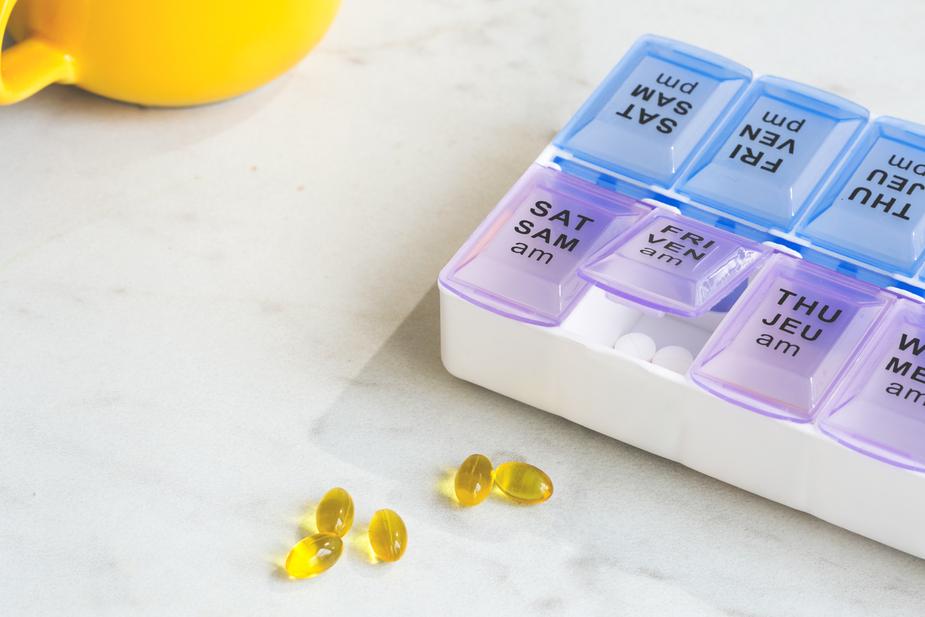
It's easy enough to just pop a pill or take some cod liver oil  (which also contains vitamin A). Either of these options can ensure that we get the minimum amount of vitamin D, plus a bit extra.

Before we take vitamin D containing supplements, however, we should make sure we check that they won't interact with other supplements or medications we may be taking. We should always read our labels, and ask healthcare professionals for advice.

We should also not take more than the suggested dosage on the label of any vitamin D supplement, except under medical care.

The maximum amount recommended for the general population is 4,000 IU/day. Too much vitamin D can raise the levels of calcium in our blood unsafely, and this can affect our hearts and kidneys.

If concerned, the best thing is to ask healthcare professionals to do a blood test and make a recommendation about how much vitamin in supplement form is right for you. Healthcare practitioners may recommend higher amounts of vitamin D supplementation for a short time while under their care.
Picture

Recipe Time!

Overall, vitamin D is an essential fat-soluble vitamin. Many people have a hard time maintaining adequate levels of it, especially in the winter months or in certain climates. There are three main ways to get enough of vitamin D: sun exposure, through certain foods, and in supplements. These options should give us some ideas as to how we can get the minimum 400-600 IU of vitamin D daily.

If concerned, it's best to request a blood test that tests vitamin D levels to be sure what's right. Always take supplements as directed.

Why not start today by checking out the vitamin D rich recipe below?
Picture

Recipe: Super Simple Grilled Salmon

Recipe (Vitamin D): Super Simple Grilled Salmon

Serves 4

Ingredients:
  • 4 wild salmon fillets
  • 1 bunch asparagus
  • 1/4 tsp sea salt
  • 1/4 black pepper
  • 1/4 tsp dried parsley
  • 1/4 tsp. dried dill
  • 4 tbsp olive oil

Instructions:
  • Preheat the oven broiler and raise the oven rack. Place parchment paper on a baking sheet and place fish on top, skin-side down. Surround with a single layer of asparagus.
  • Sprinkle the fish and asparagus with sea salt, pepper, parsley, and dill. Drizzle with olive oil.
  • ​Broil for 8-10 minutes until fish flakes easily with a fork.
  • Serve & enjoy!

Pro Tip: Serve with a side of rice or quinoa.
Simple Wins:

"I haven't measured or weighed myself in weeks and when I stood on the scale last night I was down 2 pounds just by trying to do my best. And I feel amazing."

-Simple Swaps Member Melissa

Fulfilling Your Vitamin D Quota

If you want to start being more mindful about getting enough vitamin D in your diet, I would love to chat with you about different options you can try to do just that! If there's anything else you would like to chat about regarding your diet, we can cover that too. 

I'd love for you to book a free health coaching call. I want to find out what you are struggling with and give you my best tips to start you on a journey toward a lean and healthy body for life.

My clients often tell me after their first week in the Simple Swaps program, their cravings for sweets settle down and they are able to make better food choices naturally. They love the new freedom they find with regards to food!

Click on the button below to book your free call now.
Picture
Book Your Free Call Now!
References:
http://thewellnessbusinesshub.com/yes-nutrient-deficiencies-heres-proof-can/
http://www.hc-sc.gc.ca/fn-an/nutrition/reference/table/ref_vitam_tbl-eng.php
https://ods.od.nih.gov/factsheets/VitaminD-HealthProfessional/
http://www.precisionnutrition.com/all-about-vitamin-d
https://authoritynutrition.com/vitamin-d-101/

Comments

Eating Local & Fresh

Comments

 
Picture

What Does Summer Mean?

It means fresh produce!

Like the holidays, summer gets a bad reputation for its effect on our health. It is a social season full of delicious food, and it can feel like it's full of temptations that make it easy to stray from healthy eating. However, the abundance of fresh, local produce is something people forget about when they talk about the pitfalls of summer eating. Summer is actually an amazing time for healthy eating, and doing so is easier than we might think. 

Today I'm going to talk about where to find fresh and local produce and how to integrate them into our diets, as well as the many benefits eating local has on our lives. 
Picture

The Best Places To Buy Local

You might be asking, where is the best place to buy local produce in my community? Well, one of the best places is to find farmer's markets in your community. As pictured above, the Fresh and Friendly Truck is a pop up market in the White City community. After a long decline, the number of farmer's market is growing again because of the demand for local and organic foods. Also, when we shop at farmer's markets we support small businesses and help local farmers prosper and grow, win-win!

I also find local produce at certain groceries stores when they stock fresh produce, pick your own berry farms and even friend's gardens when I am lucky! Another great idea is to post in local buy & sell groups to see if any neighbours have produce to sell. 

There are also a few local companies with a mission to help people access fresh produce in their busy lives. For example, Local & Fresh in Regina is a home delivery service that specializes in local produce, meat and other goods. Zesty Kits is another Regina company that delivers healthy, locally made meal kits to your home.  If you're interested in Zesty Kits, contact me for more information and a discount!
Picture

Buying Local Is Better For Your Health

Along with being delicious, eating local is also better for our health! Some of the main reasons are:
  • Local foods are generally richer in nutrients. Local produce most often ripens naturally and is picked fresh. It also has a shorter distance to travel from the farm to us, so there is less time for the nutritional value to decrease. Produce that needs to be shipped long distances is often picked before it is ripe, making it less nutritious and less tasty. 
  • Local foods are oftentimes exposed to less chemicals and pesticides. Foods that are picked when unripe are often artificially ripened with chemicals such as ethylene gas. Also, if our food has shorter distances to travel, it has less opportunity for contamination due to washing, shipping and distribution.
  • Buying local gives us a better connection with our food. We are more aware of where our food comes from, who grows it and what their practices are. 
Picture

Buying Local Is Better For The Environment

Buying local doesn't only benefit our personal health, but it can also positively affect the environment around us:
  • Buying local reduces our use of fossil fuels. Like I mentioned above, when we buy local, our food has a much shorter distance to travel from the farm to us. This means that less fossil fuels need to be used by trucks, ships, planes and trains to ship our food. 
  • Buying local encourages us to use less plastic. Farmers markets generally use less plastic than grocery stores to package their goods, and customers are more motivated to bring their own non-plastic bags to shop. 
  • Local food markets help preserve green space. Huge grocery stores often take up a lot of land with detrimental effects like diminishing green space and animal habitats. Local producers oftentimes use existing spaces for their markets, and only set up temporarily. It is also in the interest of farmers to preserve and develop green space!
Simple Wins:

"Down 3.5 lbs and 0.5 " after week 1. Mentally I feel more in control and less upset about where I am at in my journey. Tomorrow morning is actually my weigh in for week 2 so looking forward to seeing those results. I was at a family reunion this weekend where healthier options weren't always the main focus, however, I didn't go overboard like I usually do!"

-Simple Swaps Member Michelle

Integrating Local, Fresh Food Into Our Diets!

Wondering how to integrate local and fresh food into your diet? Or have you already done so, and are wanting to chat about new recipes ideas to try?

I'd love for you to book a free health coaching call. I want to find out what you are struggling with and give you my best tips to start you on a journey toward a lean and healthy body for life.

My clients often tell me after their first week in the Simple Swaps program, their cravings for sweets settle down and they are able to make better food choices naturally. They love the new freedom they find with regards to food!

Click on the button below to book your free call now.
Picture
Book Your Free Call Now!
References:
https://foodrevolution.org/blog/why-buy-local-food/
http://msue.anr.msu.edu/news/7_benefits_of_eating_local_foods
https://well.org/conscious-consumers/10-advantages-of-buying-local/
https://foodrevolution.org/blog/why-buy-local-food/

Comments

Make Cooking Fun!

Comments

 
Picture

Here's How To Make Cooking More Fun...

Do you have a hard time getting excited about cooking? Have you often wished there was something you could do to make cooking just a little bit more fun? I am here to help!

I know that sometimes I don't find cooking to be all that fun, especially when I have a particularly busy day balancing family and professional responsibilities, cooking is just one more thing to add to the list! I can get into a rut just like everyone else. 

This is why I have listed my best fun cooking tips here... when we need it, we will be able to refer to this list and hopefully that will make cooking that much more enjoyable! I've also included a delicious, quick recipe at the end of the post, so keep reading. 


Picture

#1: Check Out New Recipes

Sometimes just seeing beautiful food photos and reading recipes can spark some inspiration and fun in your kitchen.

We can head to our local bookstores. We can also look up our favourite nutritionists, chefs, bakers, and other online foodies. Simply doing a quick search on Google or Pinterest can offer thousands of fresh, new ideas.

​Summer also brings lots of fresh produce and markets with it. Make an effort to buy tasty, fresh and inspiring ingredients. When you look in your fridge it will seem like these delicious ingredients are just waiting to be eaten!

Pro Tip: Searching through recipes can be so fun and inspiring, and can also end up taking waaaay longer than planned. So, consider setting a timer when browsing. The last thing we want is to spend so much time looking, that we don’t leave enough time for cooking.


Picture

#2: Make Grocery Shopping Fun & Inspiring

When at the grocery store, it's a great idea to try things that we haven't bought in a while. Is there a seasonal fruit or vegetable you haven’t had for months? What about a childhood favourite? Did you come across something totally delicious at a restaurant or get-together lately? 

We can also try browsing around the store, looking for something we haven't tried before; something that is completely new to us. Be adventurous and have fun. Then we can refer to tip #1 to find new and inspiring recipes when we get home!
​

#3: Keep It Simple

​Sometimes when I see a great food picture, I immediately get inspired to make it. But if I look at the ingredients or instructions and they're too long or they look complicated I get overwhelmed.  While there are times when I'm inspired and dive into a new great recipe, when I'm not all that inspired, I try to keep things simple.

A few ways to keep things simple are to:
  • Search for recipes with 10 or fewer ingredients, and five or fewer instructions.
  • Search for recipes that can be made in one pot or pan.
  • Buy ingredients that are ready to cook with (pre-washed salad greens, diced squashes, frozen vegetables, etc.)​
​
Picture

#4: Put On Some Music & Invite Guests

Do you have kids that need to learn the critical life skill of cooking? It can be so much fun to bring kids into the kitchen, they can help with washing veggies, chopping, mixing, setting the table and clean up. Perhaps your partner would love to join you? What about having a cooking party where everyone brings something and pitches in on the process?

Cooking does not have to be solitary. It can be very social as well as a great opportunity for bonding. For example, a great way to feel inspired to cook on regular weekend evenings is to invite guests over and make a night out of it! When you are cooking alone, playing music or listening to podcasts and the radio can be great ways to enjoy yourself.


Pro Tip: Hosting pot lucks can be a great way to get inspired with new recipes and make cooking more social. 
​

#5: Invest In Some Kitchen Swag

Having proper kitchen tools makes cooking so much easier, faster and more enjoyable. When's the last time you sharpened your knife? Or bought yourself a new one? Could dicing carrots with a dull knife be draining the fun from cooking? Or is blending a smoothie with a crummy blender, leaving it too chunky to enjoy, making you feel less excited to try new smoothie recipes? I know it does for me.

Sometimes buying a new appliance or kitchen tool can make cooking a lot more exciting. It doesn't have to be anything too fancy or expensive, just think of something you will make use of in your day to day life. 

For example, one of my all-time favourite kitchen tool is my spiralizer. It helps make veggies interesting and fun! I love to spiralize zucchini, sweet potatoes, cucumbers, beets and apples. 

Pro Tip: Zucchini noodles are a great swap for noodles. They really help lower the carb count of recipes to help keep blood sugar levels balanced. Try this next time you're craving pasta!
​
Picture

Recipe Time!

We all know that cooking is key to healthy eating. And, yes, it can get boring from time to time. However, there are things we can do to avoid this as much as possible!

Try one, or all, of these fun cooking tips to inspire you to get over to your kitchen and cook yourself, your family or your friends some great dishes. While you're at it, check out the delicious, easy and fun recipe below. 

You already know your health will thank you!
​

Picture

Recipe: One Skillet Frittata

Recipe (Simple and Fun): One Skillet Frittata

Serves 4


Ingredients:
  • 8 eggs
  • 1/4 cup almond milk, unsweetened 
  • 1 tsp olive oil, extra virgin
  • 1 clove of garlic, minced 
  • 1 handful baby spinach
  • 1 small zucchini, sliced into thin coins
  • 1 clove of garlic, minced 
  • 1 handful cherry tomatoes, halved
  • 1 dash herbs and spices to taste (parsley, sage, paprika, turmeric, etc.)
  • 1 dash salt and pepper 

Instructions:
  • Preheat oven to 375F.
  • Whisk together eggs and almond milk.
  • Heat an ovenproof skillet (e.g. cast iron) on the stove with the olive oil.
  • Add garlic, spinach and zucchini to the hot skillet. Cook for 1-2 minutes until the spinach wilts and the zucchini starts to soften. 
  • Add the tomatoes, herbs, spices, salt and pepper. 
  • Pour in the eggs.
  • Place the skillet in the oven and bake for 20-30 minutes, until the eggs are set.
  • Serve & enjoy!

Pro Tip: Feel free to substitute your veggies and use what you have on hand. Try diced pepper instead of tomatoes, or chopped kale instead of spinach. Have fun with this!
​

Simple Wins:

"I have really focused on no sugar & watching my simple carb intake. Incorporate some form of exercise most days. The weight finally shifted. I am down 10 lbs & came home from camping with the family a pound lighter. First time not regressing!"

-Simple Swaps Member Barbara

Helping Your Meals Be Easy & Fun!

One of the best steps we can take in order to make cooking enjoyable is to make it as easy and efficient as possible. That is where effective meal planning and preparation come in...

I have something to help you start doing just that! I created the Simple Swaps Guide to Meal Planning & Prepping to help give you some simple tips and tricks. This guide was created to offer my best suggestions to help you make small changes that will have a big impact on overall health.

Click on the button below to access this free guide. 
Picture
Send Me My Free Meal Plan & Prep Guide!
Comments

Why We Eat Sugar Without Realizing It

Comments

 
Picture

Sugar Is Everywhere

As a whole, we consume massive amounts of sugar in our diet each day, even though it has been linked to a slew of health problems such as heart disease, diabetes and cancer, just to name a few. 

Sugar is a carb that is naturally found in many foods, including lactose in milk and fructose in fruit. These sugars aren’t necessarily a big problem for our health; it’s the processed and added sugars that pose the biggest dangers and it’s not always easy to avoid them.

Sugar is in so many foods, many more than we may realize. Soda and other soft drinks are the obvious culprits, with just one can of soda having as much as 7 teaspoons of sugar, but that’s not all we need to watch out for. 

Low fat diet meals often contain plenty of sugar to make up for the lower fat content and to stop it from tasting bland. Processed foods in general have added sugar, including canned soups and ready-made sauces and salad dressings.  Even bread can be a victim of sugar! This is why checking our food labels is key to ensure our diets aren’t falling victim to added sugar. 


Picture

What Does Sugar Do To Our Health?

Too much sugar essentially spikes our blood sugar levels and then leads to a big dip. We might get a sugar high in the short term but it’ll be followed by a crash that affects our moods and makes us crave more sugar. This vicious cycle is one of the main reasons why sugar is so heavily linked to obesity as it encourages us to keep eating more sugar. 

The health problems associated with sugar can go far beyond this. One of the main concerns is focused on high fructose corn syrup. Fructose in fruits isn’t all that bad and this can fool us into thinking that high fructose corn syrup can’t be that dangerous either.  In reality, it’s one of the worst types of sugar we can consume. It’s a major ingredient in a lot of foods these days as it’s cheap to produce, so it’s definitely one to watch out for and stay away from as much as we can. 

Why is it a problem? Our ancestors didn’t eat fructose other than the amount that was naturally included in fruit and some vegetables. Our livers can metabolize fructose to a large extent but when it reaches the tipping point, it starts turning it into fat instead, and this is where the health problems begin. In the modern world, a lot of us eat more fructose than the body can handle. 

Eating too much fructose can inflame our livers and build up fat. It also encourages uric acid to be produced, which raises our blood pressure and even leads to gout. More worryingly, it also affects blood lipids and cholesterol levels,  which can lead to cardiovascular problems and type 2 diabetes. 

Even fruit juice can contribute to this as it is high in fructose. According to studies, its fructose content can encourage the body to store abdominal fat, especially the type that surrounds organs. 

We’re better off choosing whole fruits, rather than fruit juices, as the fructose in these is naturally occurring.  We’ll also get more fiber from whole fruits and we’d have to eat an unrealistic amount for their fructose content to become a cause for concern. 

Pro Tip: Mix natural sugars with protein to balance blood sugar levels and to stop the sugar being absorbed into the bloodstream as quickly. For example, team a piece of fruit with a handful of nuts or some yogurt. This can also help to curb cravings.
​

Picture

What To Look Out For

Sugar often won’t be included on the ingredients as sugar. Food manufacturing companies are getting crafty when it comes to labelling their products. Sugar can be labelled as a long list of other names and it can be hard to really understand what we’re eating. Anything ending in ose is an obvious giveaway, including glucose, sucrose or table sugar, and maltose are just a few names for sugar.

Less obvious signs that something contains sugar are syrups such as rice syrup and corn syrup. And then there’s the big one, high fructose corn syrup. 

So called sugar free foods generally contain artificial sweeteners such as sucralose and aspartame. Studies have suggested that these don’t do a lot to satisfy sugar cravings and may actually contribute to obesity.  There are also concerns that they may pave the way for health problems. You can read more about artificial sweeteners in my recent blog post.

If these type of ingredients are high up on the ingredients list, then we know that there’s a good amount of sugar hiding in the food.

Let's go through our pantries and check our labels. What has hidden sugar in it? 
​
Simple Wins:

"What I like most about your approach is how approachable and understanding you are! You always see the positive which for me is very helpful. What I like about the program is that it is doable. Lots of support to get started and then things fall into place. I love the aspect of the on-going coaching!"

-Simple Swaps Member Brenda

Reducing Our Sugar Intake Together

There is sugar hiding in our diets in very unexpected places! It can be very tricky to figure out what exactly those places are. The good news is, once you know where to look, it is very easy to minimize your sugar intake! I am here to help you do just that. 

I'd love for you to book a free health coaching call. I want to find out what you are struggling with and give you my best tips to start you on a journey toward a lean and healthy body for life.

My clients often tell me after their first week in the Simple Swaps program, their cravings for sweets settle down and they are able to make better food choices naturally. They love the new freedom they find with regards to food!


Click on the button below to book your free call now.
Picture
Book Your Free Call Now!
References:
https://www.thelancet.com/journals/landia/article/PIIS2213-8587(14)70013-0/abstract
https://articles.mercola.com/sites/articles/archive/2012/12/04/saccharin-aspartame-dangers.aspx


Comments

How Food Affects More Than Just Weight

Comments

 
Picture

Wide Ranging Effects

Believe it or not, what we eat can affect many areas of our health, from our mood, energy levels to how well we sleep. All of this is to say is that eating healthily is in our own best interests for more reasons that just weight loss!

As we’ll see in this article, our bodies need a wide range of vitamins, minerals and other nutrients to keep us in great physical and mental condition, so it’s important to nourish them with the right foods and drinks. Let's find out more about how food can affect our mood, sleep, concentration and even our chances of developing depression...
​

Picture

How Food Affects Our Mood

​If our blood sugar fluctuates too much, it can leave us feeling tired and irritable. Ideally, we want to be eating foods that keep our blood sugar stable, which includes complex carbs such as brown rice, oats and whole grains. Nuts and seeds are also great for this. 

Some foods can have a direct effect on our moods, too. Fatty fish is packed with Omega 3 fatty acids that affect the production of neurotransmitters in our brains, especially serotonin and dopamine. Both of these have a really strong link with our moods and low levels are linked to mood disorders. Fatty fish isn’t the only food that gives us an Omega 3 boost; flaxseed, chia seeds and walnuts also count. To support dopamine, we should make sure we're getting plenty of poultry, fish, eggs and leafy greens in our diets. 

Protein is another nutrient that can affect our moods. A lot of foods with protein contain tryptophan, an amino acid that can help our bodies produce more serotonin and dopamine. Chicken and turkey are good sources, but if you’re a vegetarian, you can eat beans, lentils and quinoa to reap the benefits. 

What we’re not eating can also be important. According to studies, not getting enough folate or B vitamins in general can make us more prone to depression and have a negative impact on our sleep and energy levels. Greens are a great source of folate so we should be sure to include plenty of leafy greens, broccoli and peas when we’re struggling with low mood.  Low selenium levels are also linked to fatigue, anxiety and even depression. We can snack on walnuts or a handful of Brazil nuts to get our selenium levels up. 

Depression may be linked to chemical imbalances in the brain but some nutrients are thought to make this more likely, especially when deficient in them. For example, low levels of vitamin D are linked to a higher risk of depression and experts believe that getting enough vitamin D can be crucial for a healthy mind. Natural sunlight is the best option but we can also get vitamin D from our diets through fatty fish, eggs and liver. This is the better option when the sun isn’t out in colder climates.

Picture

How Food Affects Our Sleep

We might not realize it, but what we eat can have a big impact on how well we sleep. Some foods are known to encourage sleep because of the nutrients they contain. Anything containing magnesium is a good bet, according to studies. Need a magnesium boost? Go for leafy greens (especially spinach), almonds, pumpkin seeds, sunflower seeds and high quality dark chocolate. 

Another important nutrient is vitamin B6, which our bodies use to make both melatonin and serotonin. If you’re not aware of melatonin and its role in the body, it’s known as the sleep hormone. This gives an indication of how important it is for sleep! Our melatonin levels can be disrupted by blue light from screens and devices and as low levels of melatonin can make it hard to sleep well, it’s definitely something we want to be producing a decent amount of. 

When it comes to melatonin, tryptophan helps here too, as it helps our bodies make more melatonin.  Chicken, turkey, milk, nuts and seeds all contain tryptophan and can help the production of melatonin. We can even go a step further than this, as walnuts actually contain melatonin, according to a study from the University of Texas.

You can read more about the relationship between sleep and health in my recent blog post
.
​

Picture

How Food Affects Concentration

When we find ourselves struggling with concentration and focus, it’s time to look at our diets and whether we’re eating foods that are known to help. 

A 2013 study found that people who were drinking 2 cups of cacao every day for a month were able to improve blood flow to their brains, which led to better results in memory tests. If you’d rather not drink a cup of cacao, a square of high quality, minimum 70% cacao dark chocolate can have a similar effect as long as there aren’t high sugars or other additives. 

In a 2012 report, drinking blueberry juice daily for two months also led to better performance on memory and learning tests. This means that snacking on blueberries can be perfect when we need a focus boost!

And of course, there’s always water! Dehydration can cause tiredness and concentration problems, even if we’re only slightly dehydrated. Drinking a glass of water could be all we need to get more focused, if dehydration is the problem. 

Food wise, the Omega 3 fatty acids in salmon can reduce cognitive decline and keep our brains sharp and focused. Yet another good reason to eat fatty fish a couple of times per week! 


Bringing It All Together

As you can see, and as I share in the Simple Swaps program, eating healthily is about so much more than numbers on a scale. Putting nutritious food into our bodies helps us become our vibrant, most fulfilled selves, and that extends to mood, sleep, concentration and many other things! Talk about motivation!

Want more tips? I'd love for you to book a free health coaching call. I want to find out what you are struggling with and give you my best tips to start you on a journey toward a lean and healthy body for life.

Click on the button below to book your free call now.
Picture
Book Your Free Call Now!
Comments

Food Preservatives

Comments

 
Picture

What Is A Food Preservative?

A food preservative is a substance added to foods to make them last longer... to preserve them. Preservatives are added to foods that go bad quickly and have found themselves in all kinds of products in our grocery stores. 

Preservatives work to preserve food in a few different ways. Some prevent the growth of bacteria and mold. Others prevent delicate fats from going rancid.

There are so many preservatives out there. While preservatives added to foods should be approved, this doesn’t mean they’re guaranteed to be safe for everyone always. This also doesn’t mean that the food, or consuming the preservatives themselves, is healthy. 

Foods with preservatives are more processed, less nutritious foods to begin with. Not exactly health foods. So, even disregarding preservatives, we should be cutting down on these kinds of foods anyway.

This week we will be learning a bit more about common food preservatives, so keep reading!
​
Picture

#1: Salt

That’s right, salt.

FUN FACT: The term salary comes from the Latin word for salt. It’s thought that it came from the ancient Romans who would pay employees, allowing them to buy salt. Either that, or it was for their work conquering and guarding salt mines. Either way, salt was sought because of its ability to preserve food before the advent of refrigeration.

In today’s day and age, with fridges and freezers in every home and grocery store, salt is not needed for food preservation as much. However, our taste buds still seem to crave it on an epic scale! The average American eats over 3,400 mg of sodium per day, well over the recommended 2,300 mg/day. Much of that is because it’s found in processed foods.

According to Harvard Health:
"... reducing dietary salt (table salt that is only sodium, chloride and iodine) will lower blood pressure, reduce the risk of heart attack and stroke, and save lives."

​All in all, s
alt is one of those all too common food preservatives that most of us will do betterwith less of.
​

#2: Nitrites (Nitrates & Nitrosamines)

Nitrites are preservatives added to processed meats. They're not bad in and of themselves, but they do turn into harmful chemicals called nitrosamines. Nitrosamines are carcinogens found in cigarette smoke. Nitrites form nitrosamines when they're cooked at high heat, and sometimes even when exposed to the high acid environment of the stomach.

Nitrites are added to meats to keep the pink-red colour and prevent browning, mostly in bacon, ham, sausages and lunch meats. Since nitrites can change into nitrosamines, nitrites are one-step away from being the bad guys.

Another interesting thing is that processed meats have been linked with colon cancer. Could that be because of the nitrites? Perhaps, but either way, nitrosamines are a confirmed health-buster.

Since nitrosamines are the bad guys and are formed by cooking nitrites at high heat, what exactly are nitrates?

Nitrates are naturally found in many healthy foods like vegetables. They’re especially high in beets. Sometimes our enzymes or gut bacteria change these healthy nitrates into nitrites. However, they rarely form nitrosamines because they’re two-steps away from becoming these bad guys.
​

Picture

#3: BHA & BHT

Have you ever noticed that sometimes on packages it says that “BHA/BHT has been added to the package to help maintain freshness?” Perhaps on cereal packages or in gum? Guess how these compounds maintain freshness? Preservatives.

​
BHA (butylated hydroxyanisole) and BHT (butylated hydroxytoluene) are antioxidants added to many processed foods. The main thing that BHA and BHT do is prevent fats from going rancid. Are they safe? Well, they're approved for use as a preservative at small doses. However, some studies show they can cause cancer in animals at high doses. Again, because they're often added to processed pre-packaged foods, it's wise to avoid them nonetheless.
​

Picture

Recipe Time!

The short version of this story is that in the modern world, there aretons of preservatives in our food supply. We also have more processed foods available to us than ever before, and most of us don't have time to grow our own food. Compounds in preservatives work by preventing the growth of bacteria and mold, and by preventing fats from going rancid. Therefore, the best thing we can do to avoid these preservatives is to avoid processed, and eat fresh foods.

To start giving you some ideas of how fresh food substitutions can be used to replace some of our favourite processed foods, check out the delicious kale chip recipe below.


Picture

Recipe: Kale Chips

Recipe: Preservative Free Kale Chips

Serves 4

Ingredients:
  • 1 bunch of kale, washed and dried
  • 1 tbsp olive oil
  • 2 dashes sea salt
  • 2 dashes garlic powder

Directions:
  • Preheat oven to 300F and place a sheet of parchment paper on a baking sheet.
  • Take the washed and dried kale and rip them into "chip" size pieces and place in a large bowl.
  • Drizzle with olive oil, salt, and garlic powder. Mix until the kale pieces are evenly covered.
  • Place kale onto prepared sheet in an even layer. Bake for 10 minutes.
  • Flip over the kale to cook the other sides of the pieces. Bake for another 10 minutes until the edges just start turning brown. Monitor them well, or you'll have burnt kale chips.
  • Serve & enjoy!

Pro Tip: You can use any spice, so try onion powder, paprika, or even turmeric.

Minimizing Our Preservative Consumption

One of the best ways we can ensure we minimize the preservatives we consume is eating fresh foods. Many people worry that fresh foods are time consuming to prepare, but there are a lot of things we can do to make the process simple and ​efficient. 

I have something to help you start doing just that! I created the Simple Swaps Guide to Meal Planning & Prepping to help give you some simple tips and tricks. This guide was created to offer my best suggestions to help you make small changes that will have a big impact on overall health.

Click on the button below to access this free guide. 
Picture
Send Me My Free Meal Plan & Prep Guide!
References:
https://en.wikipedia.org/wiki/Salary
https://authoritynutrition.com/are-nitrates-and-nitrites-harmful/
https://authoritynutrition.com/9-ways-that-processed-foods-are-killing-people/
http://www.precisionnutrition.com/all-about-endocrine-disruptors
http://www.health.harvard.edu/newsletter_article/salt-and-your-health
https://examine.com/nutrition/scientists-just-found-that-red-meat-causes-cancer--or-did-they/
https://authoritynutrition.com/chewing-gum-good-or-bad/
http://www.inspection.gc.ca/food/labelling/food-labelling-for-industry/list-of-ingredients-and-allergens/table/eng/1369857665232/1369857767799


Comments

Why Am I Always Hungry?

Comments

 
Picture

Do You Often Feel Hungry?

...you are not alone!

There are many reasons to feel hungry. Of course, the most obvious one is actually being physically hungry. Perhaps our stomaches are empty, our blood sugars have dropped, and our hunger hormones are having a party.

Other times, however, our hunger may not be physical hunger. It may be a craving or an emotional trigger. These are common reasons why some people eat too much. It could be brought on by a certain type of diet, stress, or other things going on in life. 

It’s easy to mistake psychological hunger for physical hunger.

In this week's blog post, I'm going to talk about the difference between both of these types of hunger, as well as give you some tips on how to figure out which is which. I will also share a very healthy, filling recipe with you at the end of the post, so keep reading!

Picture

Physical Hunger Vs. Psychological Hunger

Our physical hunger is regulated by the body through our hunger hormones. And of course, it should be. We don't want to be completely drained of fuel and nutrients for a long time. So, we're programmed to seek food when our bodies physically need it. These physical need indicators include things like an empty stomach, or low blood sugar levels. 

Psychological or emotional hunger include eating to overcome boredom, sadness, stress, and so on. This kind of eating is based on a thought or feeling, and is what happens when we see a great food commercial or smell a bakery, rather than from an empty stomach or low blood sugar.

Make sense? Let's delve into figuring out which is which... 
Picture

Am I Really Hungry?

1. The first thing we need to do is stop and evaluate. Scarfing down that protein bar at the first sign of hunger isn’t necessarily going to help us.

2. Now that we’ve stopped, we need to pay attention to where our hunger is coming from. Can we actually feel or hear our stomaches growling? Did we skip a meal, and haven’t eaten in hours? Or are we seeing and smelling something divinely delicious? Perhaps we’re bored, sad, or stressed? Take a peek into all these areas and really pay attention.

3. Have a big glass of water. Now we need to observe our hunger feelings for at least a minute. Really dig into the source of the feelings. It can be easy to jump to a conclusion, but that may or may not be the right one. So, listen very deeply.

4. When we feel like emotions may be the source of our hunger, we need to face them, acknowledge and observe them. They may just need comfort and recognition, even if they seem like they need food. Try deep breathing, having a stretch, or going for a quick walk to release some of these emotions. This also gives our minds a chance to focus on something other than the feeling of hunger.

5. When we feel sure that our bodies physically need nutrition, we should just wait a few more minutes to make sure.

6. At this point, we can be fairly sure whether our hunger was from emotions, boredom, thirst, or actual physical hunger.

7. If it's physical hunger, feel free to eat healthy and nutritious food. Foods that are high in protein, fibre, and water really fill us up. Foods such as eggs, oatmeal, fish, meat, yogurt & nuts are great. Eat slowly and mindfully. Chew well and savour every bite.

8. Repeat at the next sign of hunger!
​
Picture

Recipe Time!

Overall, the feeling of hunger can manifest itself for many reasons. Of course, if we’re physically hungry and need the food and nutrients, then this is what it’s for!

But often, there is an underlying psychological or emotional reason we might feel hungry. Luckily, now we can refer to my eight steps to figure out when our bodies are physically hungry, or if we're bored, sad or stressed. 

We can use this process over and over again until it becomes habit! That way, we will feed our bodies what they actually, physically need, and not overdo it.
​

Picture

Recipe: Slow Cooker Beef & Sweet Potatoes

Recipe: Filling, Slow-Cooker Roast Beef and Sweet Potatoes

Serves 6

Ingredients:


  • 2 onions, sliced (do this and go to step 1 before preparing the rest of the ingredients)
  • 4 lb beef roast
  • 1 lb sweet potatoes, peeled & chopped
  • 1 lb carrots, peeled & sliced
  • 2 celery sticks, sliced
  • 2 dashes dried thyme or sage or parsley
  • 2 cloves garlic crushed
  • 2 dashes salt & pepper

Instructions:

  • Place a layer of sliced onion at the bottom of the slow cooker. Put the lid on and turn the heat up to high; this will start caramelizing the onions while you wash and slice the rest of the ingredients.
  • When all ingredients are ready, take off slow cooker lid and add meat and the prepared vegetables, garlic, herbs, and spices. 
  • Cook on high for 3-5 hrs, or on low for 6-8hrs, or until done.
  • Serve & enjoy!

Pro Tip: You can substitute different vegetables if you like.  Try parsnips instead of carrots or cauliflower instead of sweet potatoes.

Start Managing Your Hunger!

One of the most effective steps we can take towards managing our hunger and feeling energetic and satisfied throughout long, busy days is ensuring that we eat regularly and plan our meals effectively. 

I have something to help you start doing just that! I created the Simple Swaps Guide to Meal Planning & Prepping to help give you some simple tips and tricks. This guide was created to offer my best suggestions to help you make small changes that will have a big impact on overall health.
 
Click on the button below to access this free guide. 
Picture
Send Me My Free Meal Plan & Prep Guide!
References:
https://authoritynutrition.com/ghrelin/ 
http://www.precisionnutrition.com/dealing-with-mysterious-hunger 
https://authoritynutrition.com/18-ways-reduce-hunger-appetite/ 
https://authoritynutrition.com/15-incredibly-filling-foods/ 

Comments

The Gut-Brain Connection: How To Feed Your Brain

Comments

 
Picture

Our Guts Are Considered Our 2nd Brains

Yes, it's true. There is no denying it anymore!

Because of the new scientific discoveries about the vagus nerve, the enteric nervous system, and the amazing influence our gut microbes can have, it's no wonder what we eat feeds not only our bodies but can directly affect our brains.
​

I find all this amazing, although not too surprising. And, we are going to learn all about the gut-brain connection in this week's blog post, as well as finish off with a great overnight oats recipe!

Picture

What Is The "Gut-Brain Connection?"

Well, it’s very complex, and to be honest, we’re still learning lots about it! We do know that there seem to be many different factors working together. Things like:

  • The vagus nerve that links the gut directly to the brain;
  • The enteric nervous system, AKA the second brain, that helps the complex intricacies of digestion flow with little to no involvement from the actual brain;
  • The massive amount of neurotransmitters produced by the gut; 
  • The huge part of the immune system that is in the gut, but can travel throughout the body; and,
  • The interactions and messages sent by the gut microbes.

This is all very complex, but equally awe-inspiring, if you ask me. Keep reading to learn about the amazing ways in which our guts and our brains are connected...

The Vagus Nerve

​The vagus nerve is a nerve that runs directly from the gut to the brain.

After reading this blog post so far, you’ll probably get a sense of which direction 90% of this transmission is…

It is not from our brains to our guts, which is what we used to think, but from our guts up to our brains! Who knew!
Picture

The Enteric Nervous System

Would you believe me if I told you that the gut has more nerves than your spinal cord?

I knew you would!

This is why the gut is referred to as the second brain. If you think about it, controlling the complex process of digestion, which includes things like digestive enzymes, absorption of nutrients, and the flow of food, probably requires a lot of intelligence to organize, right?

Guess how these nerves speak to each other, and to other cells? Using chemical messengers called neurotransmitters.

In fact, many of the neurotransmitters that have a strong effect on our moods are made in the gut! That's right, a whopping 95% of serotonin​ is made in your gut, not in your brain! 
Picture

The Gut's Immune System

Because eating and drinking act as huge portals where disease-causing critters can get into our bodies, it makes total sense that much of our defense system would be located there too, right? 75% of our immune systems are in our guts!

And you know that immune cells can move throughout the entire body and cause inflammation just about anywhere, right?

Well, if these cells are activated by something in the gut, they can potentially wreak havoc anywhere in the body. Including the potential to cause inflammation in the brain.
​

Gut Microbes

Gut microbes are our friendly neighborhood gut residents. We have billions of these little guys happily living in our guts. They do amazing things like help us digest certain foods, make certain vitamins, and even help regulate inflammation!

However, more and more evidence is showing that changes in our gut microbiota can impact our moods, and even other, more serious, mental health issues.
Picture

Foods To Eat For Optimal Brain Health

The honest answer to how these things all work together is that we really don't know just yet. More and more studies are being done to learn more.

One thing is becoming clear, however. A healthy gut goes hand-in-hand with a healthy brain!

So, how do we feed our brains?

Of course, a variety of minimally-processed, nutrient-dense foods is required, because no nutrients work alone. It is also very important to lower intake of sugar and processed carbs as the unhealthy microbes love sugar and continue to multiply in a high sugar environment.

However, two things that we can try and eat more of are fiber and omega-3 fats. Fiber, found in fruits, veggies, nuts & seeds, help to feed our awesome gut microbes. Omega-3 fats, found in fatty fish, walnuts, algae, and seeds like flax, chia, and hemp, are well-know inflammation-lowering brain boosters.


Picture

And While We're At It...

...there are lots of different foods that we can start integrating into our diets that will make our guts, and our brains, very happy! 

First off, probiotic rich foods that are naturally fermented such as sauerkraut, kombucha and unsweetened yogurt are packed with many different strains of good bacteria to help balance the microbiota.

Other good for your brain foods include vegetables like kale and sweet potatoes, berries, nuts, seeds, fish, and even cacao! They are full of prebiotic fiber, healthy fats and really pack a punch towards a healthier, happier body! 


Picture

Recipe: Blueberry Hemp Overnight Oats

Recipe: Blueberry Hemp Overnight Oats (Gut food fiber, brain food omega-3s)

Serves 2

Ingredients:


  • 1 cup blueberries (fresh or frozen)
  • 1 cup steel cut or rolled oats (gluten-free)
  • 1 cup almond milk
  • 1 tablespoon chia seeds
  • 2 tablespoons hemp seeds
  • ½ teaspoon cinnamon
  • 1 banana, sliced
  • ¼ cup chopped walnuts

Directions:

  • Blend blueberries in the food processor until smooth.
  • Mix blueberries, oats, almond milk, chia seeds, hemp seeds in a bowl with a lid. Let set in fridge overnight.
  • Split into two bowls and top with cinnamon, banana, and walnuts.
  • Serve & enjoy!

Pro Tip: Your gut microbes love to eat the fiber in the blueberries, oats, seeds, and nuts. Meanwhile, your brain loves the omega-3 fats in the seeds and nuts.

Want To Improve Your Gut-Brain Health?

Did this blog post inspire you to work towards a healthier brain by nourishing your body? Are you wondering what kinds of food you should be eating to optimize your gut-brain connection, as well as your overall health? If so, I am more than happy to help you do just that. 

I'd love for you to book a free health coaching call. I want to find out what you are struggling with and give you my best tips to start you on a journey toward a lean and healthy body for life.

Click on the button below to book your free call now.
Picture
Book Your Call Now!
References:
http://www.health.harvard.edu/blog/nutritional-psychiatry-your-brain-on-food-201511168626
http://www.hopkinsmedicine.org/health/healthy_aging/healthy_body/the-brain-gut-connection
http://www.precisionnutrition.com/all-about-probiotics
http://www.precisionnutrition.com/fix-gut-fix-health
http://neurotrition.ca/blog/your-gut-bugs-what-they-eat-and-7-ways-feed-them


Comments

Common Weight Gain Triggers To Avoid After 40

Comments

 
Picture

Why Can't I Lose Weight After 40?

If you notice your weight starting to creep up once you hit 40, your lifestyle could be having more of an effect than you think!

We all know the obvious triggers such as eating too much and not getting enough physical activity, but there are some sneakier factors that can play a big part in weight gain. In today’s blog post, we talk about some of the most common factors to avoid so that we can keep our tummies trim and within a healthy weight range!
​
Picture

Too Much Stress

When we struggle to keep our stress levels under control, there’s a good chance that it affects our weight, especially for women. Our bodies release the stress hormone cortisol during stressful periods, and this can make our blood sugar levels go haywire. Studies have found that high cortisol production leaves us craving sweet foods and means we’ll probably end up eating more calories.
 
Cortisol also changes how our bodies use glucose, making it harder to burn fat and easier to store fat. Women are more likely to store fat in their middle section, but this can also be true for men. Abdominal fat has been linked to health issues, so it’s definitely something we want to keep to a minimum!
​
Picture

Falling Into Emotional Eating Habits

Not taking care of our well-being can mean that we eat in line with our emotions rather than when we’re genuinely hungry. Feeling sad, stressed, lonely, bored or disappointed can lead us to eat to fill an emotional void and crave particular foods... and usually the unhealthy kind!
 
We might feel a little bit better in the immediate aftermath, but in the longer term, this type of emotional eating can have a big effect on our weight. Most of the time, we won’t get a signal to say that we’re full, and it’s all too easy to find that we’ve eaten a lot more than we planned to in a very short space of time. Above all, we probably won’t feel any better afterwards. In fact, we may well feel a whole lot worse as it’s common for emotional eating to make us feel guilty and ashamed of our food choices.

Picture

Not Sleeping Well

Poor sleep quality makes us more likely to eat more calories and gain weight. This is because it disrupts hormones that control our appetite. Lack of sleep increases production of ghrelin and decreases leptin levels, which means it’s harder to manage our appetite.
 
Sleeping well is one of the underrated ways to keep our weight in check as our levels of these hormones will be a lot more balanced. It can be hard to prioritize, as a woman with many responsibilities, but it can go a long way towards our health! 

Picture

Not Building Muscle Mass

If we spend a lot of time sitting down and not being very active, it doesn’t help us build any muscle mass. This might not seem like a big deal, but it’s a common weight gain trigger.
 
Lean muscle boosts our metabolism and makes it that little bit easier to burn calories. When we don’t have much lean muscle, our metabolism doesn’t get this benefit and it’s harder to burn calories.
 
One of the best ways to build more muscle mass is through strength training. Don’t worry, you don’t have to end up looking like a bodybuilder! The idea of strength training is to build a toned body with minimal body fat, rather than the bulky look we often associate with weights. 
Picture

Not Eating Enough

Being on a diet means that we’re definitely going to lose weight, right? Not always! Restricting our calorie intake too much slows down our metabolisms and encourages the body to go into starvation mode so that it can run on fewer calories. This also means that we burn fewer calories as our bodies use most of our intake to survive.
 
These kinds of diets are very hard to stick to in the long term. It is very common that people go back to a less restrictive way of eating, yet their bodies can still be more likely to store fat. This is why many people find that they gain weight after coming off a low-calorie diet. 

Picture

Eating Low Fat Foods

Just because a food claims to be low fat, doesn’t always mean that it’s going to help us to stay in shape.

A lot of supposedly low fat options are often high in sugar and salt to make them tastier and can also contain a lot of calories. Eat too many of these low fat foods and it's easy to put weight on! 

Picture

Tips For Avoiding These Triggers

So, what can we do to avoid these common triggers and get our bodies in the best shape?
 
  • Eat a healthy, balanced diet that isn’t too restrictive on calories and stay away from low fat foods that can promote weight gain.
  • Be physically active and help our bodies gain more muscle mass.
  • Get plenty of sleep to keep appetite hormones in balance.
  • Making stress reduction a big part of our self-care routines and finding healthier ways to manage our emotions that don’t involve emotional eating.
  • Adopting a more mindful approach to eating so that we don’t eat on autopilot.
Simple Wins:

"If someone was asking about your program I would tell them that they should definitely arrange a coaching call with you. That it would be the best call they ever made because help and support are waiting."

-Simple Swaps Member Brenda

Want Ways To Manage These Triggers?

These weight gain triggers are super relatable, but lucky for us, there are many things we can do to address them! Triggers such as emotional eating, not eating enough & eating low fat foods can be addressed by being intentional and mindful about what we put into our bodies. 

I'd love for you to book a free health coaching call. I want to find out what you are struggling with and give you my best tips to start you on a journey toward a lean and healthy body for life.

Click on the button below to book your free call now.
Picture
Book Your Call Now!
Comments

Transformation Tuesday: Brenda has lost over 42 pounds & 45 inches!

Comments

 
Picture

A Program As Flexible As You Are

In this week's Transformation Tuesday post, I'd like to introduce you to Brenda, a retired school teacher and grandmother who has had great success on my Simple Swaps Program.

When Brenda approached me, she had hit a low point with her health. Struggling with arthritis and low energy levels, she had simply had enough with feeling low!

After a friend introduced her to my blog, she read my posts for a few months and once she had gotten to know me and my health coaching philosophy better, she decided to book a free health coaching call.

Fast forward to today: Brenda has now lost over 42 pounds and 45 inches! She feels better than ever, and not only feels more confident and has expanded her wardrobe, most importantly she has more energy to play with her grandson.

Family is #1 for me and I have designed my Simple Swaps Program to fit with your busy lifestyle as a mom, grandma, wife, friend. It's as flexible as you are and the goal is always to give you more health and higher energy levels so you can be the best you can be for your family!

Continue reading to hear more about Brenda's transformation...
Picture

More Energy to PLAY!

"Before starting your program my weight was a daily issue. I have arthritis which really affects my knees and my weight really made matters worse. I was also having a lot of issues with sore feet. I was tired all the time and had low energy. I was at 230 pounds. Nothing fit, I hated going out because dressing was an issue. In spite of all this I was constantly craving sugar and was eating tons of it with no end to the cravings. My confidence?? ...what confidence?? I have always struggled in that area but being so overweight just compounded the issue.

A friend had emailed me about the Simple Swaps program as she knew my struggles and thought I might be interested. For a few months I followed your blog and learned more about your coaching philosophy. After Christmas I was desperate and decided to reach out and see where it would take me. So glad I did!  

​
Now I am at 188 pounds, half way to my goal and have lost 42 pounds and 45 3/8 inches.

I have something to wear and actually feel comfortable in most of my clothes. I look forward to expanding my wardrobe with some of the smaller sizes waiting.

The cravings that were driving me crazy are gone most days and are controllable when they are there. I am sleeping better and my energy levels are improving.

If someone was asking about your program I would tell them that they should definitely arrange a coaching call with you. That it would be the best call they ever made because help and support are waiting.

What I like most about your approach is how approachable and understanding you are! You always see the positive which for me is very helpful.
What I like about the program is that it is doable. Lots of support to get started and then things fall into place. I love the aspect of the on-going coaching!"

~ Brenda M.

Picture

Want to be a Healthier You?

When you put your health first, you're putting your family first! Not only do you become a more positive role model for healthy habits, you gain more energy, confidence and overall sense of wellness. 

I would love to meet you and learn more about your family life and your health goals, and then tell you about my best ways to make your health a priority. Click here to book your free health coaching call!

I specialize in coaching women who:

  • Have children or grandchildren they want to keep up with!
  • Are pre-menopause, going through menopause, or are post-menopausal.
  • Have low-thyroid or other hormonal imbalances impeding weight loss.
  • Have busy lives working, being a mom, care-giver and/or partner.
  • Wish they could eat healthier but don't have the time or knowledge.
  • Are new moms looking for guidance on the healthiest lifestyle for their growing family.

If one or more of those sounds like you - let's chat! I offer 30 minute health coaching calls 100% free because I care about the health and well being of women everywhere - and that includes you!

Yes! I want a free health coaching call!
Comments

6 Simple Tips To Avoid Hot Flashes

Comments

 
Picture

Hot Flashes...

...Are common, unpleasant symptom of menopause and they can strike with little warning and at inconvenient times!

Fear not! There are many steps that we can take to minimize or eliminate the dreaded symptoms of temporarily heightened body temperature, and most of them start with diet! Avoiding some foods, while making sure to eat plenty of others, can help us avoid menopause’s most notorious side effect!
​

Picture

Hot Flash Trigger #1: Alcohol

Many of us enjoy a glass of wine now again, but watching our alcohol intake is a good idea for many reasons, including limiting hot flashes!

Studies show that frequent drinkers have more frequent and severe hot flashes. So make sure to indulge infrequently and responsibly!
​

Picture

Hot Flash Trigger #2: Spicy Foods

Spicy foods, though often delicious, have been proven to cause hot flashes. Capsaicin, the active chemical element in hot peppers, dilates blood vessels, which can spur hot flashes and make then more intense.

So, we have to make sure to be careful around spicy foods, and when we do enjoy them, to follow each spicy meal with plenty of water.
​

Picture

Hot Flash Trigger #3: Coffee

​A hot cup of coffee is a great way to start the day off right, and I love my morning coffee, trust me. However... did you know that caffeine makes hot flashes much worse? As many as two out of three women have been proven to have more frequent and more intense hot flashes.

No need to sacrifice that cuppa’ Joe though...a great way to avoid this is to simply swap caffeinated coffee for decaf!
​
Picture

Hot Flash Helper #1: Fruit

Now that we’ve chatted about some foods to avoid, let’s talk about foods that have been shown to positively combat hot flashes! Fruit is delicious, sweet, refreshing, full of nutrients, and has been proven to reduce hot flashes.

Eating natural fruit instead of baking, candy, or chocolate is also a great way to cut down on refined sugar in our diet; something that helps our bodies in many other ways. You can read more about the effect that sugars have on our bodies in this recent post. 
​
Picture

Hot Flash Helper #2: Flax Seeds

Flax seeds are easy to find at many grocery stores and health food stores, and they are great at balancing our hormone levels, which helps minimize hot flashes.

Pro Tip: Add a tablespoon to cereals, oatmeals, smoothies, and baking to boost oestrogen and fight hot flashes!
​
Picture

Hot Flash Helper #3: Nuts & Legumes

Legumes, nuts, and seeds are also excellent fighters of hot flashes!

Foods like these can have a positive effect on reducing hot flashes frequency and are also proven to help reduce dry skin caused by menopause. 
​

Trying To Manage Menopause Symptoms?

Hot flashes are normal! They are nothing to be ashamed of, and most of us get them. But by taking these simple, easy steps, you can reduce their frequency and severity so that you can enjoy the things you care about most! 

If you still feel like you need more help managing menopause symptoms such as hot flashes, weight gain, difficulty sleeping,  I am here to help!  You are welcome to book a free menopause breakthrough call. 
​
​I want to find out what you are struggling with and give you my best tips to start you are on journey toward a lean and healthy body for life.

Click on the button below to book your free call now.
​
Picture
Book Your Call Now!
Comments

The Coconut Oil Craze: Should I Jump On The Bandwagon Too?

Comments

 
Picture

Yes, You Should!

What exactly is it about coconut oil that makes it so healthy​? And which type is best? Let’s dive into some of the fascinating research and find out!

...coconut oil is a special kind of fat.

Coconut oil contains the same 9 calories per gram as other fats and is extracted from the meat of the coconut. It is a white solid at room temperature easily melts into a clear liquid on a hot day (or over a hot stove!)

The idea of adding coconut oil to our diets is not to add on to what we already eat, but to substitute it for some of the possibly less healthy fats we may be eating now.

Here's why... because not all calories or fats are created equal!

Coconut oil contains a unique type of fat known as Medium Chain Triglycerides or MCTs.  In fact, 65% of the fat in coconut oil are these MCTs.

What makes MCTs unique is how our bodies metabolizes them; they're easily absorbed into the bloodstream by the gut, where they go straight to the liver and are burned for fuel or converted into ketones. 

This metabolic process, unique to MCTs, is what sets coconut oil apart from other fats.
Picture

MCTs May Help With Fat Loss

Coconut oil’s MCTs have been shown to have a few different fat loss benefits.

First, they can help to increase feelings of fullness, which can lead to a natural reduction in the amount of food we eat.

Second, because of their unique metabolic route, MCTs can also increase the number of calories we burn. This happens when comparing the calories burned after eating the same amount of other fats.

In fact, a few studies show that coconut oil may increase the number of calories we burn by as much as 5%.

Third, some studies show that eating coconut oil can help reduce belly fat or waist circumference. The importance of this is talked about in my previous blog post. 

Just remember not to add coconut oil to your diet without reducing other fats and oils.

How Much Coconut Oil Should We Eat?

Many of the studies that showed increased fullness, increased metabolism, and reduced belly fat only consumed about 2 tablespoons per day.

We probably don’t need any more than that!
Picture

What Kind of Coconut Oil Is Best?

​There are so many coconut oil options available in grocery stores these days that it can make it difficult to know which is best, especially when trying to be efficient shoppers in our busy lives!

Try and stay away from refined varieties, and opt for virgin coconut oil. This is because virgin coconut oil is processed at lower temperatures and avoids some of the chemical solvents used in the refining process; this helps to preserve more of the oil's natural, health-promoting antioxidants.

Something we should also consider is that each oil has a specific high temperature that we should avoid surpassing, e.g. the smoke point. For virgin coconut oil, that temperature is 350F, meaning we can safely use it on the stovetop on a low-medium setting, as well as in most baking.


Pro Tip: Always avoid hydrogenated coconut oil. It can be a health nightmare because it contains the infamous ​trans fats.
Picture

Recipe Time!

The moral of the story is... if we substitute some of the fat we eat with coconut oil, it can help us lose weight and belly fat by helping us naturally eat less, as well as slightly increasing our metabolism! 

Oh, and it tastes great too! 

All these benefits stemming from a simple ingredient swap.

Why not try baking something new with coconut oil with the recipe below?
Picture

Chocolate Coconut Bark

Recipe: Chocolate Coconut Bark

Serves 12

Ingredients: 

  • 1/3 cup coconut oil, melted 
  • 1 cup cocoa or cacao powder
  • 4 tablespoons maple syrup 
  • 1/4 tsp sea salt 
  • 1/2 cup  slivered almonds
  • 1/4 cup shredded unsweetened coconut

Directions:
  • Melt coconut oil, then whisk in maple syrup, salt and cocoa/cacao powder until smooth.
  • Stir in slivered almonds until evenly distributed. 
  • Pour into an ice tube tray and freeze. 
  • Store in fridge or freezer to avoid melting.
  • Serve & enjoy!

Pro Tip: Substitute other seeds, chopped nuts or dried fruit instead of the almonds if you wish. 
Simple Wins:

​"People often comment about my “diet.” I tell them it is not a diet.. I can eat anything I want, but I choose not to because I don't have the cravings for unhealthy foods any more, and the foods I do eat are filling and delicious."


-Simple Swaps Member Audrey

Looking For More Healthy Substitutions?

Looking for more easy substitutions you can make in your life that will have a big impact on your health? You're in luck because that's what Simple Swaps is all about!

In order to help you determine your specific needs and personalized steps so you can feel your absolute best, I'd love for you to book a free health coaching call. I want to find out what you are struggling with and give you my best tips to start you on a journey toward a lean and healthy body for life.

Click on the button below to book your free call now.
Picture
Book Your Call Now!

​References:

https://authoritynutrition.com/top-10-evidence-based-health-benefits-of-coconut-oil/
https://authoritynutrition.com/coconut-oil-and-weight-loss/
https://authoritynutrition.com/20-most-weight-loss-friendly-foods/
http://www.precisionnutrition.com/encyclopedia/food/coconut-oil/
http://neurotrition.ca/blog/your-brain-coconut-oil
Comments

The Truth Behind Artificial Sweeteners

Comments

 
Picture

What's The Deal With Sugars?

We all know the negative health effects of eating too much sugar, especially added sugars like in soda pop, candy, baked goods, and many commercially-available cereals, just to name a few.  Added sugar is hiding just about everywhere in the grocery store.

Ingesting refined sugar spikes our blood sugar and insulin, and increases our risk for a whole host of issues.

A while ago, one of the food industry’s responses to the demand for lower-calorie foods that still taste great, was artificial sweeteners.

The idea behind them is that we can still get the sweetness...without the calories; like when we have a diet pop instead of regular one. Theoretically, this was going to help people maintain a healthy body weight, and hopefully not increase anyone’s risk of heart disease, diabetes, or obesity.

But, things don't always work out the way we think they will...
​
Picture

Types Of Artificial Sweeteners

Sugar substitutes fall into several categories, but what they all have in common is that they have a sweet taste and fewer calories than regular sugar.

Today, we'll specifically discuss artificial sweeteners, which are synthetic chemicals where a tiny bit tastes very sweet.

They're also known as non-nutritive sweeteners, and include things like:
  • Saccharin (Sweet & Low)
  • Acesulfame potassium
  • Aspartame (Equal & NutraSweet)​
  • Sucralose (Splenda).
​
Picture

Health Effects Of Artificial Sweeteners

Negative health effects from artificial sweeteners are cited in several studies. and while many studies show effects, others don't. Cancer? Maybe yes, maybe no. Heart disease? Maybe yes, maybe no. Not to mention that much of the research has been done on animals, which may or may not translate to people. Yet many other claims --- confusing claims --- have been cited over the years.  

​New evidence, in fact, states that people who frequently consume sugar substitutes may be at an increased risk of excessive weight gain, metabolic syndrome, type 2 diabetes, and cardiovascular disease. 


I did want to point out one ironic thing, to do with artificial sweeteners and weight.

Studies found that people who tend to drink diet sodas have double the risk of gaining weight than those who don't. 

Another study (
Multiethnic Study of Atherosclerosis) has shown an increased risk for metabolic syndrome and diabetes for those who consume diet drinks every day.

Aren’t these the diseases that artificial sweeteners were supposed to help prevent in the first place?

Don't be fooled into reaching for products labeled diet or sugar free thinking that they are healthier options! Always make sure to carefully check the label and nutritional information.

Picture

The Effect On Our Bodies

...now that’s a million-dollar question!

When it comes to artificial sweeteners we should air on the side of caution. It is best to avoid artificial sweeteners while trying to reduce our overall sugar intake while more studies are being completed for the following reasons...


  • People can trick themselves into thinking that they can eat unhealthier foods such as cake because they have switched to diet soda, nullifying potential health and weight loss benefits. 
  • Products with artificial sweeteners change the way we taste food, making fruit and veggies taste less and less appetizing. 
  • Artificial sweeteners increase our cravings for sweets as we stop associating the flavour with caloric intake. 
  • The sweet taste of these sweeteners send signals to our body to release insulin to lower our blood sugar; but, because we didn’t actually ingest sugar, our blood sugar levels get too low, to the point where we get sugar cravings.
  • At least one animal study suggests, that saccharin may inspire addictive tendencies.
  • There could be an even more complex response that involves our gut microbes and how they help to regulate our blood sugar levels.

Picture

Recipe Time!

Understand that added sugar is not good for us, but the solution is not to replace them all with artificial sweeteners.

I highly recommend reducing sugar intake, so we naturally re-train our palate and start enjoying the taste of real food that isn't overly sweet. This way, we're reducing intake of added sugar, as well as not needing to replace it with artificial sweeteners.

Try having a ½ teaspoon less of sugar in your hot morning drink. Try diluting juice with water. There are simple ways to reduce our sugar intake in our busy lives! Your body will thank you!

There are also some sneaky places that artificial sweeteners might be hiding... watch out for: light or diet fruit juices or beverages, breakfast cereals, processed snacks, yogurt, baked goods, salad dressings, chewable vitamins and gum, and no-calorie waters and drinks. 


Pro Tip: Swap sugar in recipes for a small amount of  honey, maple syrup, pitted medjol dates or stevia.  Add plenty of fibre, healthy fats and protein to these recipes along with these sweeteners to slow down the release of sugar into the blood stream.  

Picture

Chocolate Coconut Bars Recipe

Ingredients:

Base:
  • 1/4 cup coconut oil
  • 2 cups unsweetened, shredded coconut
  • 1/4 cup honey

Topping:
  • 1/2 cup dark chocolate
  • 1/8 cup coconut oil 

Directions:
  • Melt coconut oil just until it is liquified. 
  • Add shredded coconut and honey. Combine well. 
  • Press mixture into a parchment paper lined 8 x 8" baking pan and refrigerate until solid.
  • Melt chocolate and coconut oil and spread over coconut base. 
  • Chill and cut into squares and keep refrigerated. 
  • Serve & enjoy!​
​

Trying To Avoid Artificial Sweeteners?

Are you trying to avoid artificial sweeteners and added sugars but aren't sure where to start? It all starts with meal planning and what you buy in the grocery store! I have something perfect to help you...
 
Planning what to eat to help you feel your best should be easy! I created the Simple Swaps Guide to Meal Planning & Prepping to give you some simple tips and short cuts in the kitchen. This guide was created to offer my best suggestions to help you make small changes that will have a big impact on overall health.
 
Click on the button below to access this free guide. ​
​
Picture
Send Me My Free Meal Plan & Prep Guide!

References:
http://www.health.harvard.edu/blog/artificial-sweeteners-sugar-free-but-at-what-cost-201207165030
https://authoritynutrition.com/artificial-sweeteners-blood-sugar-insulin/
http://www.precisionnutrition.com/research-review-splenda-is-it-safe
https://chriskresser.com/the-unbiased-truth-about-artificial-sweeteners/
​

Swithers SE, Patterson NA. Artificial sweeteners produce the counterintuitive effect of inducing metabolic derangements. Trends in Endocrinology & Metabolism. 2013.

​
Comments

Four Cholesterol Myths

Comments

 
Picture

What Is Cholesterol?

You knew there was a bit of an over-emphasis, borderline obsession, on cholesterol, right?
Warnings against eating foods that are high in cholesterol have been a dietary recommendation for decades. Cholesterol has had a bad reputation typically linked to heart attacks, strokes and other types of cardiovascular disease.

Before we jump into some myths surrounding cholesterol, let's make sure we're on the same page when it comes to what exactly cholesterol is...

Cholesterol is a type of fat or lipid.  It is an essential building block for cell membranes and other important structures. While cholesterol is an actual molecule, what it is bound to while it's floating through our blood is more important than how much of it there is overall. In fact, depending on what it's combined with, it can have opposite effects on our arteries and hearts.  Yes, opposite!

So, cholesterol is just one component of a compound that floats around our blood.  These compounds contain cholesterol as well as fats and special proteins called lipoproteins.  

They're grouped into two main categories: 
  • HDL: High Density Lipoprotein (AKA good cholesterol) that cleans up some of those infamous arterial plaques and transports cholesterol back to the liver.
  • LDL: Low Density Lipoprotein (AKA bad cholesterol) that transports cholesterol from the liver. It is also the kind found to accumulate in arteries and become easily oxidized, hence their bad reputation.

And yes...it's even more complicated than this! Each of these categories is further broken down into subcategories which can also be measured in a blood test.

So, cholesterol isn't simply cholesterol because it has very different effects on our bodies depending on which other molecules it's bound to in our blood and what it is actually doing there!


Picture

Myth #1: Cholesterol Is Bad

Cholesterol is absolutely necessary for our bodies to produce critical things like vitamin D when our skin is exposed to the sun, our sex hormones estrogen and testosterone, as well as bile to help us absorb dietary fats.  Not to mention that it's incorporated into the membranes of our cells.

Talk about an important molecule!

The overall amount of cholesterol in our blood, total cholesterol, isn't nearly as important as how much of each kind we have in our blood.

While way high levels of  LDL cholesterol as compared with HDL, the LDL:HDL ratio, may be associated with an increased risk of heart disease, it is absolutely not the only thing to consider for heart health.
Picture

Myth #2: Eating Cholesterol Is Bad

Most of the cholesterol in our blood is made by the liver.    In an average person the body's production of cholesterol far outweighs the contribution from cholesterol in food.  Why do you think cholesterol medications block the enzyme HMG Co-A reductase in our livers?  Because that's where it's made!

Of course, what we eat can still affect how much cholesterol our livers produce. After a cholesterol-rich meal, our liver doesn't need to make as much.

Picture

Myth #3: Cholesterol Should Be Very Low

As with almost everything related to health and wellness, there's a balance that needs to be maintained.  There are very few extremes that are going to serve us well, and cholesterol is no exception! 

​
People with very low levels of cholesterol have an increased risk of death from other non-heart-related issues like certain types of cancers, anxiety, depression and impaired memory.

​Maintaining balance is key!
​

Myth #4: You Need Drugs To Balance

While drugs can certainly lower the bad LDL cholesterol, they don't seem to be able to raise the good HDL cholesterol all that well.

Guess what does?

Nutrition and exercise.

One of the most impactful ways to lower our cholesterol with diet is to lower intake of sugar and refined carbs and eat lots of fibre rich vegetables.  I mean lots, say up to 10 servings a day. Every day. The recipe below should help us add at least another salad to our veggie repertoires!


Exercising, losing weight, quitting smoking, and eating better quality fats are also key.  That means fatty fish, avocados and olive oil. Ditch those over-processed, hydrogenated trans fats.

Pro Tip: Never start or stop taking any medications without talking to your doctor.

Picture

Healthy Tips & Recipe Time

Overall, the science of cholesterol and heart health is complicated and we're learning more every day! Science including nutrition is a constant process of change.  As new findings emerge we need to reevaluate recommendations.  The key is to keep ourselves informed!

There is a lot we can do from a nutrition and lifestyle perspective to improve our cholesterol levels.

One easy tip is to try and avoid unhealthy hydrogenated trans fats and opt for healthy fats instead, such as olive oil, avocado, nuts, seeds and fish.  Another important strategy is to lower intake of sugar and refined carbs to help balance blood sugar and lower inflammation in the body. 

Why not start integrating more healthy veggies and healthy fats into your meal plan by trying the Asian Chicken Salad recipe below?
Picture

Recipe: Asian Chicken Salad

Recipe: Asian Chicken Salad

Chicken Ingredients:
  • 2 boneless, skinless chicken breasts
  • 2 tablespoons coconut aminos
  • 2 teaspoons sesame oil
  • 1 clove of garlic pressed

Salad Ingredients:
  • 4 cups shredded cabbage
  • Orange peeled and diced
  • ½ cup grated carrots
  • ½ cup chopped green onions
  • ¼ cup toasted sunflower seeds
  • ¼ cup toasted slivered almonds
  • ¼ cup toasted sesame seeds

Dressing Ingredients:
  • ¼ cup olive oil
  • 2 tablespoons sesame oil
  • 2 tablespoons coconut aminos
  • 1/2 teaspoon grated ginger
  • 1 clove fresh pressed garlic
  • 1 teaspoon honey or pinch of stevia
  • ½ teaspoon sea salt
  • 2 teaspoon fresh lime juice

Directions:
  • Preheat oven to 350 degrees Fahrenheit 
  • Coat chicken with the marinade for 30 minutes.
  • Add chicken and marinade to baking dish. Bake for approximately 30 minutes.  Let cool and dice into pieces. 
  • Add dressing to salad.
  • Add diced chicken to salad.
Simple Wins:

"I am so thankful for the help from Cheryl in losing the pounds as it made a big difference in how my clothes fit. In fact, I am wearing clothes I purchased years ago and have no need to go shopping.  My husband likes that!!"

-Simple Swaps Member Marlene

Looking For Ways To Balance Cholesterol?

Looking for ways to balance your cholesterol through nutrition? Look no further! I have a guide just for you, full of meal planning and prep suggestions to make having a healthy, balanced diet nice and easy.
 
Balancing your meals effectively should be simple and quick.  I created the Simple Swaps Guide to Meal Planning & Prepping to help give you some simple tips and tricks. This guide was created to offer my best suggestions to help you make small changes that will have a big impact on overall health.
 
Click on the button below the access this free guide. 
Picture
Send Me My Free Meal Plan & Prep Guide!
Comments

Why Waist Measurements Matter More Than Weight

Comments

 
Picture

Wouldn't It Be Nice To Ditch The Scale?

Many of us have this kind of relationship with our weight. We know that the numbers on the scale aren't the be all end all of a healthy lifestyle, but it can be hard not to preoccupy ourselves with them.  

There are so many different factors other than weight that should be kept in mind on our health journeys and it is important to remember that. Our weight can matter but only to a certain extent.

Today we're going to be talking a little bit about our waist circumferences and what they mean in relation to our health journeys... you look at yours and I'll look at mine! Keep reading, because I will also be sharing a delicious, high fiber, weight loss friendly side dish at the end of the post!
Picture

Waist Circumference (AKA "Belly Fat")

Do you remember the fruit themed body shape descriptions being like an apple or a pear?  The apple is round around the middle and the pear is rounder around the hips and thighs.

That is just what we're talking about here.

Do you know which shape is associated with a higher risk of sleep apnea, blood sugar issues such as insulin resistance and diabetes, and heart issues such as high blood pressure, blood fat, and arterial diseases?

Yup, that apple!

This isn't because of the subcutaneous under the skin fat that we sometimes call a muffin top.  The health risk is actually due to the fat inside the abdomen covering the liver, intestines and other organs.

This internal fat is called visceral fat and that's the biggest source of health issues. It's this un-pinchable fat.  

The reason the visceral fat can be a health issue is because it releases fatty acids, inflammatory compounds, and hormones that can negatively affect your blood fats, blood sugars, and blood pressure.

Apple-shaped people tend to have a lot more of this hidden visceral fat than the pear-shaped people do.

Now we can begin to understand that where our fat is stored is much more important than how much we weigh.
Picture

Am I An Apple Or A Pear?

Now, here comes the good news. It's pretty simple to find out if you're in the higher risk category or not. The easiest way is to simply measure your waist circumference with a measuring tape.  You can do it right now! Quick and easy. 

Women, if your waist measures 35” or more you could be considered to have abdominal obesity and be in the higher risk category.  Pregnant ladies are exempt, of course.

For men, the number is 40”.

Of course, this isn't a diagnostic tool.  There are lots of risk factors for chronic diseases and waist circumference is just one of them. If you have concerns or want more specific information, you should absolutely see your doctor.

You can also read more about body composition in my previous blog post. 
Picture

Tips To Help Reduce Belly Fat

  • Lower our sugar intake. This means ditch the processed, sweetened foods- especially those sweet drinks (even 100% pure juice).
  • Eat more fiber.  Fiber can help reduce belly fat in a few ways. First of all, it helps us feel full and also helps to reduce the amount of calories we absorb from our food. Some examples of high-fiber foods are brussel sprouts, flax and chia seeds, avocado, and blackberries.
  • Add more protein to our diet. Protein reduces our appetite and makes us feel fuller for longer. It also has a high TEF (thermic effect of food) compared with fats and carbs, and ensures we have enough of the amino acid building blocks for our muscles.​
  • Move more. Get some aerobic exercise. Lift some weights. Walk and take the stairs. We should always do exercise that aligns with us! It all adds up.
  • Stress less. Seriously! Elevated levels in the stress hormone cortisol have been shown to increase appetite and drive abdominal fat.
  • Get more sleep. Making this a priority can make us feel so much better. Read more about this in my recent post.

​...how many of these tips can we try implementing today?
Picture

Garlic Lemon Roasted Brussel Sprouts

Recipe: Garlic Lemon Roasted Brussel Sprouts (High Fiber Side Dish)

Serves 4

Ingredients:
  • 1 lb. brussel sprouts (washed, ends removed, halved)
  • 2-3 cloves of garlic (minced)
  • 2 tablespoons extra virgin olive oil
  • 2 teaspoons fresh lemon juice
  • A dash of salt and pepper
  • Plain, slivered almonds (optional)

Directions:
  • Preheat oven to 400F.  
  • In a bowl, toss sprouts with garlic, oil, and lemon juice. Spread them on a baking tray and season with salt and pepper.
  • Bake for about 15 minutes. Toss.
  • Bake for another 10 minutes.
  • Serve and Enjoy!

Tip: Brussel sprouts contain the fat-soluble bone-loving vitamin K.  You may want to eat them more often.

Working Towards Losing Waist Inches?

Are you working towards losing inches off your waist to help you look and feel amazing, vibrant and healthy? Would you like some help planning healthy meals and snacks to help with these goals? I am here to help you!
 
Planning what you eat should be easy and effective, not draining! I created the Simple Swaps Guide to Meal Planning & Prepping to help give you some simple tips and tricks. This guide was created to offer my best suggestions to help you make small changes that will have a big impact on overall health.
 
Click on the button below the access this free guide. 
Picture
Send Me My Free Meal Plan & Prep Guide!
Comments

A Message for Mother's Day

Comments

 
Picture

Happy Mother's Day!

Happy Mother’s day all you amazing mothers! I love that we set aside a day to honour the women who raised us.

Today I wanted to show my gratitude and appreciation towards the mothers in my life, starting with my mom, Marlene (pictured with me above), who you may have read about in a Transformation Tuesday blog post a few months ago.

My mom is an amazing woman. As I reflect on my gratitude for her, I appreciate her selfless love and dedication to our family. Family is everything to my mom. Mom has 6 children, 26 grandchildren and 13 great grandchildren. Even though her own children have grown up and have families of their own, Mom is constantly on the go attending  sports events, graduations, weddings, birthdays and all the special occasions that come up in our family. Mom also gives generously of her time in her community and church - she is a truly inspiring role model for me.


Mother’s Day is also a day when I reflect on the gift of my mother-in-law, Gina (her and I are pictured below). Gina has been a part of my life for over 30 years and since the very first day I met her she made me feel like I was her own flesh and blood. Gina is a selfless giver! Her greatest gift that she loves to shower us with is her amazing Italian cooking. Her fantastic attitude and sense of humour brings the entire family so much joy!

This is the day that I reflect on the gift of my own motherhood. My greatest desire in this world was to be a mother. I am so blessed to have 6 amazing children. Our tradition for Mother’s Day is for my husband Nick and the kids to have a big barbecue with my extended family as well as Nick’s family. It is a day for the mothers to sit back and be pampered while enjoying a fun visit with everyone and marvelling at the gift of our children!​
Picture

Healthy Mom & Healthy Life!

Every year I reflect on what a blessing it is for both my mom and mother-in-law being in good health. We get to all meet up over the weekend and have a fantastic time with each other and all our children and grandchildren. 

On weekends like Mother's Day, I'm especially awed by their vivacity and that they are living their lives to the fullest with great energy!

Mom is approaching 80 and you sure would not know it to look at her. She looks amazing and has so much energy - she even runs circles around me! 

I am so proud of my mom for the good care she is taking of her body and I know that all of the good food and physical activity she does will keep her young and active for years to come! 

My mom is a Simple Swaps Superstar. I have the honour of journeying with mom through my Simple Swaps to Slim Down Program. In the first month of the program she lost 10 pounds and multiple inches! You can read all about her journey here.

I am so blessed to be able to help coach and support her, even as she's getting older, to be living her life in the healthiest, most energetic way possible.

​
Picture

Healthy Mom & Healthy Life!

What will you be doing to celebrate the mothers in your life this year?

Do you want to live life to the fullest like my mom?

A
re you looking for a new creative gift idea for your mom this Mother’s Day? How about giving your mom the gift of health? 

This Mother's Day, I am offering a 2 for 1 special for mothers and daughters!

If you're a mom, or a daughter, when you purchase the Simple Swaps Program this weekend, you'll get a second program - absolutely free! - to start the journey with a woman you care about.


Here's what your support throughout the program will look like...
  • Access to a private, online Facebook group only for people doing my program. This will be your opportunity to connect, learn and share with others who are working towards their health goals.
  • Direct access and accountability from me via text message, email, and the Facebook group, for anything you need, at any time during the 90 days.
  • An extensive library of resources - including a 400 recipe library, eBooks and Guides on re-vamping your pantry, meal-planning, money & time saving tips, and a ton more.
  • When you start with the mother, grandmother, or daughter in your life - you'll also be starting with the built-in fun and partnership of being on the journey with them!

Come and join our amazing community of support and journey with your mom to vibrant health and a lean body!

No matter what stage of motherhood you find yourself in, I hope all of you mother’s feel loved and cherished today.

​Click here to learn more.
Click Here for the Mother's Day Special!
Comments

Audrey S. Success With On-Going Coaching

Comments

 
Picture

30 Pounds & 44 Inches Lost!

Today I want to introduce you to Audrey - one of the Simple Swaps Superstars who started her health journey by joining my Simple Swaps Program.

Like many of my clients, she absolutely thrived through the 90 day program! She found her newfound energy levels and leaner body to be empowering and exciting. 

When she got to the end of the 90 day program, she reached out to me for advice because she didn't want it to be over! 

I told her about my on-going coaching program, and she was excited to get continue to have support!

On-going coaching is all about having a support system and trouble shooting check-ins to continue to THRIVE with your health goals.

Today I wanted to share Audrey's story and experience with on-going coaching in the hopes that it inspires you too!
Picture

30 Pounds & 44 Inches Lost!

"On-going coaching is my recipe for success. Hearing from Cheryl, my coach, every week and sometimes more often, keeps me focused and encourages me!  Knowing that Cheryl is there for me whenever I have a question or need help is a secure place to be. Cheryl is kind, compassionate and nonjudgmental. She is a powerhouse of knowledge helping you through whatever challenge you are facing. That is my story and I am sticking to it!!!

Before I started the program I was in a desperate state. I was very low on the scale of self esteem, had mood swings and my mind was not in a great place. I had cravings for sweets but after I ate them I did not feel well - my mind was satisfied but not my body!

When I started the Simple Swaps Program my cravings disappeared immediately. I could not believe it! 
​
This program has kept me more focused on keeping myself healthy. I am well into my senior years , which means that good health is not a given, so I decided that as long as I am living I want to be healthy.

I was on the way to diabetes and who knows what else at my age and weight, so it was up to me to do my best to take care of me!

I am so grateful for Cheryl and the support group. The weekly live videos that Cheryl does offer us personalized answers to our questions and also inform us on various topics.

​People often comment about my “diet.” I tell them it is not a diet.. I can eat anything I want, but I choose not to because I don't have the cravings for unhealthy foods any more, and the foods I do eat are filling and delicious.

As of today I have lost 30 pounds and 44 inches - and I'll definitely be continuing with Cheryl's on-going coaching!"

~ Audrey
Picture

Delicious Meals & Easy Prep

Something that a lot of people ask me before joining the program is: "What do I get to eat?"

I know that many health programs out there are restrictive - and that is something I really made sure to stay away from when I created my program.

I asked Audrey to share some of her daily meals to show you exactly how delicious and filling they are. She also shared about what her meal prepping looks like.


"Here's what my meals look like:  
Breakfast: steel cut oats, coconut milk shake, yogurt, fresh or frozen berries, etc.
Lunch: salad fixings, hard boiled eggs, chicken, etc.
Supper: chicken, salmon, veggies (I like to spiralize!) stir fry, etc.


When I first started the program, I purged my pantry and fridge following the advice and checklist Cheryl gave me. Then I made grocery lists and planned my meals. The program makes it easy to do on a weekly basis, so it doesn't feel overwhelming. Then, each day I pull from my supply of groceries to make my meal. Now I just know how to stock my fridge/pantry and no longer need to plan in detail! This way of shopping is quick and easy."


If you want to read more about what a day in the Simple Swaps Program looks like, click here to read the blog post I wrote (with images).
​​
Picture

Let's Chat!

I offer free health coaching calls because I want to help as many people as I can live their happiest, healthiest lives - and that includes you!

If you want some of my best, 100% tailored to you advice on what you can do to start losing weight and inches in the easiest way possible - let's chat!

My free health coaching calls truly are beneficial. You'll learn about my coaching philosophy, and you'll walk away with achievable action items you can start that very same day to begin seeing results.

Simply click here to pick a time that works for you, and I'll give you a call!

I look forward to chatting with you!
Yes! I want a free health coaching call!
Comments

5 Weight Loss Friendly Snacks You Will Love

Comments

 
Picture

Can "Weight Loss" and "Snacks" Coexist?

The words weight-loss and snacks often appear in the same sentence.  

However... they might also bring thoughts of tasteless, cardboard, and completely unsatisfying with them. Right?

Believe it or not, satisfying, delicious snacks can coexist with weight loss if we are aware of what to look for, what to prepare, and what tastes good. To help us figure that out, today I will be sharing my best weight-loss friendly snacks that aren't just nutritious, but tasty as well. 

Wondering what my criteria is?

A good snack should include nutrient-dense whole foods where a little goes a long way, as well as protein and/or fiber. It also goes without saying that a good snack has to ​taste good. Keep reading to find out more!
Picture

Nuts

It’s true, nuts contain calories and fat, but they are healthy and often aid in weight loss.

I’m not talking about the honey roasted ones, of course. All the additives and coatings that some nuts have pack on calories and fat with little nutritional value. Plain nuts, however, have naturally occurring fats that are actually good for us. 

In fact, studies show that people who eat nuts tend to be healthier and leaner!

Nuts contain protein and fiber, which means a small amount can go pretty far in terms of filling us up. Not to mention the vitamins and minerals we can get from nuts, and the fact that nuts are an incredibly fast and easy snack to grab on the way out the door! Perfect for our busy lifestyles.

Tip: Put a handful of unsalted/unsweetened nuts into a small container and throw it in your purse or bag.
Picture

Fresh Fruit

As with nuts, studies show that people who tend to eat more fruit, tend to be healthier... not too surprising! 

Yes, fresh fruit contains sugar, but whole fruits (I'm not talking juice or sweetened, dried fruit) also contain a fair bit of water and fiber, not to mention their nutritional value with regards to vitamins, minerals, and antioxidants. Last but not least, fresh fruit is low in calories.

Fiber is something that not only helps to fill us up (known as the satiety factor) but also helps to slow the release of the fruit sugar into our bloodstreams and reduce the notorious blood sugar spike.

Win-win!
​
To balance sugar intake, try a variety of fruit (apples, pears, berries, etc.) and pair that with a handful of nuts. 

Tip: Can't find fresh? Try frozen organic fruit.  There are lots of options available.
​
Picture

Chia Seeds

This is one of my personal favourites…

Chia is considered a superfood and is not only high in fiber, but also contains protein and omega-3 fatty acids, as well as antioxidants, calcium, and magnesium. 

Can you see how awesome these tiny guys are?

Chia seeds also absorb a lot of liquid, so by soaking them for a few minutes. They make a thick pudding that is delicious and filling.

Tip: Put two tablespoons in a bowl with ½ cup of nut milk and wait a few minutes. Add in some berries, chopped fruit or nuts, and/or cinnamon and enjoy! This makes for a delicious, healthy, filling and quick breakfast!
Picture

Boiled or Poached Eggs

Eggs are packed with nutrition and believe it or not, most of it is in the yolk! They also contain a lot of high-quality protein and a good amount of vitamins and minerals.

Recent research shows that the cholesterol in egg yolks is NOT associated with elevated cholesterol or heart disease risk.

Yup, you read that right!
​

Tip: Boil a bunch of eggs and keep them in your fridge for a super-quick and nutritious snack! Eggs are also great to add on top of salads to make them more filling.
Picture

Vegetables

I probably don’t need to tell you how great vegetables are for your health, but maybe I do need to sell you on the delicious snackability of these nutrition powerhouses.

Veggies contain fiber and water to help fill us up, and again, are full of vitamins, minerals, and antioxidants.

On busy days, we can easily open a bag of baby carrots and/or cherry tomatoes, give them a quick rinse (they’re already bite-sized), and we're good to go!
​

Tip: Add a tasty dip. Have you tried almond butter on celery? How about trying my new hummus recipe below?

Recipe Time!

...see how easy healthy snacking can be? It's all about choosing the right delicious, whole and real foods.

Go ahead and try one, or more, of these healthy snacks. If you're a busy mom or have marathon-like days, prepare them the night before if you need to. They will not be tasteless, like cardboard, or completely unsatisfying. Trust me.

Get started by trying out the delicious hummus recipe below! 

Picture

Hummus Vegetable Dip

​Recipe: Tasty Hummus Vegetable Dip

Makes about 2 cups

Ingredients:
  • 1  can chickpeas (garbanzo beans), drained & rinsed
  • 1/4 cup tahini
  • 1 garlic clove
  • 2 tbsp olive oil
  • 2 tbsp fresh lemon juice
  • 1/2 tsp ground cumin
  • 1 dash salt
  • 1 dash pepper

Directions:
  • Put all ingredients into a food processor and blend until smooth. You may need to thin it out with a bit of water, so add it 1 or 2 tablespoons at a time and blend.
  • Serve & enjoy!

Tip: Don’t like the taste of sesame? Use an avocado in place of the tahini.
Simple Wins:

"This is not a fad diet! It really works!!  The success I feel each time I eat a healthy meal is incredible!"

-Simple Swaps Member Bonnie

Want More Snack Suggestions?

If you need more help selecting and planning healthy snacks to help with your weight loss goals, I am here to help!
 
Planning what you eat should be easy and effective, not draining! I created the Simple Swaps Guide to Meal Planning & Prepping to help give you some simple tips and tricks. This guide was created to offer my best suggestions to help you make small changes that will have a big impact on overall health.
 
Click on the button below to access this free guide. 
Picture
Send Me My Free Meal Plan & Prep Guide!
Comments

How Does Sleep Affect Our Health?

Comments

 
Picture

Trouble Sleeping Through the Night?

Are you feeling exhausted, low energy or simply like you are running on stress hormones all day?

This feeling is all too familiar in the day to day lives of busy women. Oftentimes, this feeling is the result of a lack of good quality sleep. 

A lack of sleep can mean different things to different women. Some women might be dealing with the effects of menopause with it's hormonal shifts and night sweats, and therefore have trouble sleeping through the night. Other women might be stressed and overextended with professional and personal commitments, and therefore get to sleep an hour or two later than they should every night (who else can relate to this feeling?).  Many women simply have trouble clearing their mind and truly benefiting from a full night's rest, for what seems like no reason at all. 


Do not fear, although sleep disturbances can be very normal, there are many things that can be done to address them. To help us do just that, today I will be talking about how sleep affects our health, as well as sharing an amazing caffeine-free chai latte recipe!

Picture

We Are Always Learning About Sleep

Sleep is something that we all do every day and yet we're just beginning to understand all of the ways it helps us, and all of the factors that can affect it.

Lack of sleep affects just about everything in our bodies and minds.  People who get less sleep tend to be at higher risk for so many health issues like diabetes, heart disease, and certain types of cancer; not to mention effects like slower metabolism, weight gain, hormonal imbalance, and inflammation.  And, let's not forget the impact lack of sleep can have on moods, memory and decision-making skills.

Did you know that lack of sleep may even lessen the health benefits of your exercise regime?

Wow! What aspect of health does sleep not affect?
​
Picture

The 3 Main Purposes of Sleep

Once aware of the 3 main purposes of sleep, the effect it can have on nearly all aspects of our health makes total sense:

  • To restore our body and mind.  Our bodies repair, grow and even detoxify our brains while we sleep.
  • To improve our brain's ability to learn and remember things, technically known as synaptic plasticity.
  • To conserve some energy so that our brain does not need to feel 100% active, 24 hours a day.

Do you know how much sleep adults need?  It's less than your growing kids need, but you may be surprised that it's recommended that all adults get 7 - 9 hours of sleep every night. For real!

Make sure you don't skimp and get the sleep that your body needs by reading the actionable tips listed below. They will help you do just that!


Picture

Tips for a Better Night's Sleep

  • Most importantly, try to get yourself into a consistent sleep schedule.  Make it a priority and you'll be more likely to achieve it.  This means turning off your lights (and cellphones...and computers...) 8 hours before your alarm goes off.  Seven. Days. A. Week.  I know weekends can easily throw this off but by making sleep a priority for a few weeks, your body and mind will adjust and thank you for it.​
​
  • Balance your blood sugar throughout the day.  Eat less refined and processed foods and more whole foods (they are full of blood sugar balancing fiber). Choose whole grain bread instead white bread, choose the whole orange instead of the juice.  Make sure you're getting some protein and a small amount of fat with each meal.

  • During the day, get some fresh air and exercise.  These things let your body know that it's daytime; time for being productive, active and alert.  By doing this during the day, you will be able to wind down more easily in the evening.

  • Stop caffeine and added sugar intake after 12pm.  Whole foods like fruits and veggies are fine, it's the added sugar we're minimizing. Both caffeine and added sugar can keep your mind a bit more active than you want it to be come evening. (HINT: I have a great caffeine-free chai latte recipe for you below).

  • Have a relaxing bedtime routine that starts 1 hour before your lights out time (8 - 10 hours before your alarm is set to go off).  This might include dimming your artificial lights, nixing screen time and perhaps reading a book or having a bath.

How many of these tips can you start implementing today?
​
Picture

Caffeine-Free Chai Latte Recipe

Recipe: Caffeine-Free Chai Latte For Your Afternoon "Coffee" Break

Serves 1-2
​

Ingredients:
  • 1 bag of rooibos chai tea (rooibos is naturally caffeine-free)
  • 2 cups of boiling water
  • 1 tablespoon tahini
  • 1 tablespoon almond butter
  • 2 pitted medjool dates (optional)

Directions:
  • Cover the teabag and dates (if using) with 2 cups of boiling water and steep for a few minutes.
  • Discard the tea bag & place tea, soaked dates, tahini & almond butter into a blender.
  • Blend until creamy.
  • Serve and Enjoy!

Tip: You can try this with other nut or seed butters to see which flavour combination you like the best.  Cashew butter anyone?
Simple Wins:

"I will always remember the day I went shopping to start this program and cried in the grocery store! I was so overwhelmed! You were so supportive and told me I could do this. I didn’t believe in myself but you did! From the bottom of my heart and I want to say thank you!"

-Simple Swaps Member Bonnie.

Want Help Feeling Your Best?

Do you want help planning your meals to maximize your down time, find out more about how food can improve your sleep cycle, or simply talk about what you can do to increase your overall well-being?

In order to help you determine your specific needs and personalized steps so you can feel your absolute best, I'd love for you to book a free health coaching call. I want to find out what you are struggling with and give you my best tips to start you on a journey toward a lean and healthy body for life.

Click on the button below to book your free call now.
Picture
Book Your Call Now!
Comments

Haven't Changed What You Are Eating But Gaining Weight?

Comments

 
Picture

Not eating more but still gaining weight?

 Is this possible?

Yes! Gaining weight without changing our diet can be so frustrating!

We all know that the whole “calories in, calories out,” argument is an overly simplistic view of weight, especially for busy women with things like menopause affecting their bodies. 

There's definitely more to the story than just what we're eating.

A lot of this comes right down to our metabolic rate, which is affected by things like our activity levels, history of dieting, body composition, and even what we eat.

...but never fear! Let's go beyond the “eat less and exercise more,” advice and talk about some of the less obvious underlying reasons why we may be gaining weight even though we're eating the same, such as aging, hormones, sleep and stress. 

The best news of all is that there are simple strategies we can add to our eating plan and lifestyle to avoid or overcome unwanted weight gain so we can look and feel our best!
​

Picture

Aging

Many interesting things happen the older we get. Women commonly experience lower energy levels, hormonal shifts, more digestive discomfort, weight gain, as well as aches and pains.

Aging can result in significant hormonal changes for women.  These changes can contribute to loss of some lean muscle mass, as well as increases and changes in fat storage on our bodies.


There are many things we can do to increase muscle mass so our metabolism continues to support us as we age and provides us with a lean, toned body.  Add strength training to work out routines.  Exercising with light weights, weight-training machines or Pilates a few times each we can increase muscle mass, strengthen bones and increase metabolism.
​

Hormones

Our thyroid is the master controller of our metabolism and can be a massive contributor to our weight gain.  There are several factors that can affect it and throw it off course.

Struggling with low thyroid is a problem all too common in women's health. When our thyroid gets off course and produces fewer hormones, our metabolism slows down.  And, when our metabolism slows down, we can gain weight even though we're eating the same things we always have.

Menopause can also take a toll on our hormones and causes unwanted weight gain. What we used to do to stay trim often no longer works when we're going through menopause or post-menopause. 


If you want to learn more about metabolism, click here to read about it in a previous post.

Pro Tip: It is wise to get our hormone levels checked when dealing with a slow metabolism, in case we need extra support.  Oh, and try the tasty, thyroid-friendly sushi bowl recipe that I created for you at the end of this post. 
​
Picture

Sleep

There is plenty of research that shows the influence that sleep has on our metabolic rates.  

As we age and are faced with more and more responsibilities, hormone shifts or night sweats, it can become harder and harder to get a good night's sleep. The general consensus is to get 7-9 hours of sleep every night to help avoid weight gain.

It's true! Lack of sleep is linked with weight gain.

Who ever thought, we can sleep off our weight?

Pro Tip: Try to get at least 7 hours of sleep every night.  The first step is to implement a calming, before bedtime routine.  My go to strategy for a restful sleep is to unplug from my computer and phone a few hours before bedtime.  I find it beneficial to sip on a cup of Nighty Night tea and take a magnesium supplement.


Picture

Stress

It seems to be everywhere!  So many things can cause stress responses in our bodies, from personal problems to professional problems and the demands of our busy, everyday lives.

And we know that stress hormones are not going to help us sustain healthy habits or maintain a healthy weight, right?

While we can't necessarily change our stressors, we can try to adjust our stress response to them and incorporate strategies that will help us calm our bodies.
​
Pro Tip: Try meditation or yoga.  Or even mindful eating.  What about those new adult colouring books that are all the rage now? 
​
Picture

Ready To Take Back Your Ideal Shape?

Are your ready to take back your health and get back to your ideal size?  Aging, hormones, stress ​and sleep can contribute to extra weight gain. This can be a complicated and tricky time of life, but there is hope! 

I have spent the last 15 years helping women who have been struggling to get rid of unwanted weight, sleep better, have vibrant energy and regain their confidence and joy for living. There are simple strategies that we can incorporate into our eating plan and lifestyle to get rid of weight in a healthy, sustainable way.  We can fuel our bodies in such a way that we balance blood sugar and hormones levels and get our metabolism working for us rather than against us.

For example, my client Cheryl was eating the same things in her busy lifestyle of wife, mom and manager of a busy restaurant yet she began to gain weight and just couldn't seem to lose it no matter what she tried.  She was stressed, tired and ready for a change. Through my Simple Swaps approach, she was able to lose over 46 inches and 42 pounds in 12 weeks! Click here to read about it.

My motto is Simply Nourished, Purely Balanced, Fully Alive!  No matter what age we are or what state of life we are in we can succeed in meeting our goal to have a lean body.
​

Recipe Time!

Fueling our body with nutrient dense foods that are filled with vital nutrients is key to creating balance in the body.

To finish off this post, I'll leave you with a delicious, thyroid friendly Seaweed Sushi Bowl recipe.

Let me know how you enjoy it!


Picture

Seaweed Sushi Bowl 

Recipe: Seaweed Sushi Bowl (Thyroid Friendly Iodine)

Serves 2

Ingredients:
  • 1 cup cooked brown rice
  • 1 avocado (thinly sliced)
  • ½ cucumber (diced)
  • ½ red pepper (thinly sliced)
  • 1 carrot (grated)
  • 1 green onion (chopped)
  • 2 tablespoons dried seaweed (arame, wakame, or crumbled nori sheets)
  • 2 tablespoons sesame seeds
  • 3 tablespoons rice vinegar
  • 3 tablespoons gluten-free tamari sauce
  • 1 tablespoon lemon juice
  • 1 tablespoon sesame oil
  • ½ garlic clove
  • dash salt and pepper

Directions:
  • Split the first seven ingredients into two bowls.
  • Mix the rest of the ingredients together to make the dressing.
  • Pour the dressing over the sushi bowls.
  • Serve & enjoy!

Tip:  This is a great lunch to take on the go.  Keep dressing in a separate container so you can give it a shake before adding it onto the sushi bowl.
Simple Wins:​

"I won't ever go back to my old way of eating. I love the way I feel."

-Simple Swaps Member Jerri

Book A Free Menopause Breakthrough Call

If you still feel like you need more help addressing hard to control weight gain, especially during menopause, I am here to help!

In order to help you determine specific steps you can take to start losing weight now, I'd love for you to book a free menopause breakthrough call.  I want to find out what you are struggling with and give you my best tips to start you are on journey toward a lean and healthy body for life.


Click on the button below to book your free call now.
​
Picture
Book Your Call Now!
Comments

Bonnie is a Simple Swaps Superstar!

Comments

 
Picture

Bikini Season Coming Up? No Problem!

Today I'd like to introduce you to Bonnie, who has seen some incredible results following my Simple Swaps Program.

Like many of my clients, Bonnie was inspired by Edrina's story of losing over 70 pounds and 65 inches.

You can read all about Edrina's journey to health, plus the successes of many of my other clients here.​

Bonnie works as a substitute educational assistant, and has 3 children and 2 grandchildren - needless to say she lives a busy life! And she wanted a program to help fit her schedule without becoming overwhelming or taking over the small amount of free time she has in her days.

With the goal of feeling confident wearing a bathing suit while vacationing in Mexico for her daughter's upcoming destination wedding, Bonnie reached out to book a free call with me to find out just how the program could help her achieve her goals.

You can see her results and read all about her experience with the Simple Swaps Program below...
Picture

20 lbs & 21.5 inches lost

"I just want to thank you for all of your support and everything you’ve done for me over the last three months! I am just so thankful that this program has worked and that I feel so different about myself.

​Today I go to the doctor to have my blood pressure medication cut in half! My blood pressure has been quite low since I have been following this. I will always remember the day I went shopping to start this program and cried in the grocery store! I was so overwhelmed! You were so supportive and told me I could do this. I didn’t believe in myself but you did! From the bottom of my heart and say thank you!


In 3 months on the program I lost 20 lbs and as you can see from my pictures, I lost tons in inches.


This is not a fad diet! It really works!! I know it's totally a brain thing so I need to retrain my brain! The success I feel each time I eat a healthy meal is incredible! I thank God for continuing to help me every step of this journey! I know it's a lifestyle change not a "diet". I wish everyone of you success in this journey."
Picture

You Are Stronger Than You Think

Bonnie, Edrina, Angie, and all my other clients come to me with similar issues: feeling blah, not liking what they're seeing in the mirror, feeling too busy and never having enough energy to make healthy eating a priority, and so forth. The list goes on when you’re a busy wife/mom/household manager!

It doesn't feel good to feel like you're a stranger in your body.

The Simple Swaps Program isn't about launching yourself headfirst into a restrictive diet and heavy cardio routine. Because we all know that extreme changes like that don't work, right?

The Simple Swaps Program is about identifying "simple swaps" that you can start making to the ingredients you buy from the grocery store, and the things you eat during your days, from "good" to "better" to "best."

With my guidance, and the support of a whole community behind you - you become stronger than you think, and like Bonnie, you'll start seeing the results you want!

Click on the button below to learn more.
Picture
Yes! Tell me more about the Simple Swaps Program
Comments

Energy Boosting Foods

Comments

 
Picture

Low energy levels happen to the best of us!

Sometimes, despite our best efforts, we just feel low energy. This may be due to health conditions, nutrient deficiencies, metabolism, stress, lack of sleep, time of year, just feeling blah, or any number of other factors.
 
Oh, and how about that menopause thing?
 
For those of us currently going through menopause, or having recently gone through menopause, we know how drained and exhausted we can feel for no apparent reason.
 
The good news is low energy is an issue that can be addressed in a myriad of ways! One of the main ways to start feeling more energetic in our busy, day to day lives is integrating more foods that increase energy into our diets!
 
To get us thinking about how to do just that, this blog post will talk about four different food categories that will help us feel more energized when we integrate them into our diet.  
Picture

Avoid Processed Foods

As a busy wife/mom, it’s often tempting for us to buy processed foods laden with preservatives because they’ve been marketed to us as quick and easy meals. Unfortunately, they are laden with lots of empty calories and other yucky chemicals, which definitely don’t help us get the energy boost we need!

Aim to avoid overly processed foods that contain artificial flavours, colours and preservatives. I call these foods  "food like substances." My motto is: if I can't find it in my great grandma's kitchen it likely not real food.

Be sure to look for foods that are fresh and “real” and not manufactured. Choose foods with the least amount of ingredients.

Pro Tip: Shop for foods around the perimeter of the grocery store, rather than down the aisles. They keep fresh, healthy foods on the outside of the store.
Picture

Whole Foods

​When stressed and on a tight schedule, many people understandably shy away from whole foods such as grains, vegetables, fruits and legumes due to misconceptions that they take more time and effort to prepare satisfying meals with. The key, however, is familiarizing yourself with easy recipes that will help you integrate whole foods into your diet, such as The Quinoa and Berries Smoothie Bowl listed at the end of this post!
 
Whole foods are vital to boosting energy as they have not been processed! This means they contain vitamins, minerals, enzymes, antioxidants, fiber and other naturally occurring nutrients that our bodies recognize, absorb and utilize. Wholefoods energize the body!
Picture

Quality Animal Protein

​Animal protein energizes and fills us up! Eat organic, grass-fed, wild and free-range when possible.  Animal protein contains iron which boosts energy and help to keep blood sugars steady.  When blood sugar is balanced throughout the day we can avoid the spikes and crashes in blood sugar that often leave us feeling exhausted.  Always focus on the highest quality foods that you can find. Local and organic are ideal.

In a previous post, I talked all about the importance of protein and how it helps you lose weight faster. Click here to check it out.

Superfoods

Superfoods are called superfoods for a reason! They are individual foods (for example blueberries, cinnamon, sweet potatoes and salmon) with tons of nutrients, giving us yummy, easy ways to energize ourselves. Leafy greens as well as many fruits, vegetables, nuts and seeds are considered superfoods. 

Sea Plants

Believe it or not, there are many edible sea plants out there, such as green algae and seaweed, which are powerful sources of nutrition and energy! As an added benefit, eating seaweed as a snack is also a great way to satisfy salt cravings.  

​
(You can also get these in powder form to add to smoothies... such as the Quinoa & Berries Smoothie Bowl I talk about below).

Recipe Time!

One of my most loved blog posts was the one about how to build your own Simple Swaps Smoothies. 

Smoothies, when built out of whole foods and lots of protein, pack a mean health punch to power you through your days, while helping you achieve your weight loss goals.

To finish off this post on energy boosting foods, I'll leave you with one of my favourite smoothie bowl recipes for just this purpose.

Let me know how you enjoy it!
Picture

Quinoa & Berries Smoothie Bowl

Recipe: Quinoa & Berries Smoothie Bowl
 
Serves 4
 
Ingredients:
  • 2 cups plain Greek yogurt
  • ½ cup cooked quinoa
  • 4 chopped figs 
  • 1/2 cup dried goji berries
  • 1/2  chopped walnuts
  • 2 tbsp hemp hearts
  • 4 tbsp coconut flakes
  • 2 tbsp pure maple syrup
 
Directions:
  • Into each serving bowl, evenly divide and spoon in the yogurt, chopped figs and goji berries.  Sprinkle the cooked quinoa, chopped walnuts and hemp hearts over the top. Garnish with coconut flakes. Drizzle the maple syrup over the fruit, yogurt and toppings.
  • Serve & enjoy! 
Simple Wins:

"I am feeling great! I am very happy with my results so far!  I have a lot more energy and have not been hungry or craving anything!"

- Simple Swaps Member Jerri. 


Want Help With Effective Meal Planning?

If you still feel like you need more help planning meals to feel more energized, I am here to help!
 
Meal planning should be easy and effective, not draining! I created the Simple Swags Guide to Meal Planning & Prepping to help give you some simple tips and tricks. This guide was created to offer my best suggestions to help you make small changes that will have a big impact on overall health.
 
Click on the button below the access this free guide. 
Picture
Send Me My Free Meal Plan & Prep Guide!
Comments

Transformation Tuesday: Jerri L. has lost 20 lbs & 30 inches!

Comments

 
Picture

Jerri is a Simple Swaps Superstar!

Today I'd like you to meet one of my clients, Jerri L., who joined the Simple Swaps Program a little over 5 months ago.

When we first chatted Jerri told me her main health issues revolved around being overweight. In addition to uncomfortable joint pain, she had uncontrollable sugar cravings. The combination of these physical health issues also caused her mental health issues and she often suffered from bouts of depression.

Jerri's experience is not uncommon for many of the clients I start working with. Many of them find it difficult to break out of negative thought patterns ("I hate the way I look/feel"), and negative eating habits prompted by sugar cravings ("I'll just have one more bowl of ice cream"). 

Starting with a conservative goal to lose 20 pounds and 30 inches, Jerri not only achieved it, today she feels better than ever!

In her words: "
Because I am healthier I am making healthier choices, and exercising everyday is something I now look forward to. I also sleep well now (because my blood sugar is balanced). Something I haven’t done for years."

Keep reading to hear more about her success on the Simple Swaps Program...
Picture

I love the way I feel!

​"When I started on the Simple Swaps program, I thought I was a healthy eater. I didn’t eat that much processed food or sugar. I never drank pop. However, I still had health problems.

My arthritis was very painful. Some days I could hardly get out of bed. I was overweight and depressed.

Cheryl’s philosophy of healthy eating has been educational and inspiring. The simple swaps method is easy to follow. It makes sense to trade healthy for unhealthy foods.

It is a way of life for me now and I've lost over 20 pounds and 30 inches!

I wont ever go back to my old way of eating. I love the way I feel."

~ Jerri L. 
Picture

A Simple, Sustainable Solution.

You might be wondering: but how did she achieve those goals?

Through the Simple Swaps Program, I taught Jerri to make simple ingredients swaps to her meals and snacks in order to balance her blood sugar, support her hormone levels and increase her metabolism so she could lose weight and increase her overall energy levels.


I gave her lots of tips to make meal planning simple and fun - something that's really important, especially if we have a busy lifestyle. 

Jerri learned that this simple approach is not a diet but rather a lifestyle that she can easily keep up even after she meets her goals.
 

With 20 pounds and 30 inches lost, her next goal is to double her success and lose another 20 pounds and 30 inches. I'm happy to report that she is well on her way!


If you're interested in learning more about the Simple Swaps Program and how it can help you, click here or on the button below, or feel free to email me directly to [email protected] for more info.

Yes! I want to be LEAN for LIFE!
Comments

Do I Need Digestive Support?

Comments

 
Picture

Do I Need Digestive Support?

Are tummy troubles getting you down?  Do you struggle with bloating, gas, acid reflux, constipation or diarrhea? These are key indicators of digestive issues that require further attention.

One of the first places to look when we are having these struggles is whether or not we have sufficient enzymes to digest our food properly.  Without digestive enzymes we can not take up the nutrients from our food.

So, let’s dive into a few of the common digestive enzymes, what they do, and how supplementing with enzymes can support digestion, metabolism and overall health.

What Are Digestive Enzymes?

Enzymes are compounds that help critical biochemical reactions to happen in our body. These reactions can be anything, from making neurotransmitters like serotonin, to burning food for energy, to breaking down food we eat into smaller pieces that can be absorbed.

All of the “macronutrients” we eat including proteins, carbs and fats need to be broken down into smaller particles so that we can properly absorb and digest them.  Foods are broken down into amino acids, fatty acids, cholesterol, nucleic acids, simple sugars, etc. If we don't have the necessary digestive enzymes, foods do not break down and we don’t absorb them properly.  This can lead to symptoms of fatigue, nutritional deficiency, digestive distress, or a host of other issues.  

Fun Fact : The names of most digestive enzymes end in "ase".  

The most common digestive enzymes are:

  • Lactase - Helps to break down lactose into sugars.
  • Amylase - Helps to break down starch into sugars.
  • Protease - Helps to break down protein into amino acids.
  • Lipase - Helps to break down fats into lipids.
  • Alpha-Galactosidase - Helps to break down specific “fermentable carbohydrates” into sugars.​
  • Bromelain and/or Papain - Helps to break down protein into amino acids.​
Picture

Signs Of Digestive Enzyme Deficiency 

The most common symptoms of digestive enzymes deficiency are bloating, cramping and diarrhea, particularly if it happens after eating certain foods. One example would be lactose-intolerance symptoms after eating dairy.  

You may be wondering what causes digestive enzyme deficiencies.  Many factors affect the level of enzymes our body produces.
​
  • Chronic stress is the most common reason for digestive enzyme problems.   When we are stressed and in a state of "fight or flight" digestion becomes a low priority for the body. This can lead to impaired enzyme output.
  • Health conditions can impair optimal enzyme production.  For example conditions such as Crohn's disease, ulcerative colitis, cystic fibrosis, diverticulitis, constipation or diarrhea as well as chronic inflammation can lead to low enzyme production.
  • Age-related enzyme decline can affect digestion.  Aging is related to a decrease in acidity in the stomach which creates a more alkaline environment.  This can have an effect of digestive function.  As we age, organs such as salivary glands, stomach, pancreas and small the intestine sustain gradual cumulative damage which impairs their ability to function properly. ​
  • Poor diets consisting of processed foods that lack nutrients can also diminish enzyme production.  Processed foods demand an enormous amount of digestive enzymes in order to be broken down effectively. This is due to their highly processed nature and additives and the fact that they no longer contain the enzymes that are contained in fresh, raw foods.
​
Digestive enzymes are not just beneficial but they are essential for overall health.  If we are struggling with poor digestive function, malnutrition, enzyme insufficiency or a disease that interferes with the digestive process it may be beneficial to supplement with digestive enzymes.  Many find relief once having adequate digestive enzymes.
Picture

Tips to Aid Digestion

I find that many individuals with digestive issues want to jump straight into using  supplements to get some relief.  However, I always recommend lifestyle strategies first to help correct imbalances and reduce symptoms. Food and lifestyle choices are key for optimal digestion and overall health.  If we need extra support, digestive enzymes would be the next step.

These are my top tips to aid digestion:

Slow Down and Chew More
My first recommendation for digestive distress would be to relax while eating and to slow down and chew more.  Aim for 15 -20 chews per bite. This helps to break down food and can put less stress on our digestive tract. 

Eat Whole Foods
Eating plenty of fibre rich vegetables and fruits, whole grains, legumes and nuts and seeds along with some healthy fats and easily digested protein will all promote better digestive health.  

Stay Hydrated
We need to drink plenty of mineral rich water.  Water should not be consumed with or just after meals, as it can dilute digestive juices and reduce food digestion and nutrient absorption.

Watch for Food Intolerances
Pay attention to foods that may be triggering digestive distress.  Keep a food journal and record how you are feeling after eating and list any digestive issues arising after eating certain foods. This will help you recognize the foods that are triggering digestive distress. Try eliminating possible trigger foods from your diet for a period of time. Continue to record positive or negative changes to see if digestion improves.

If digestive issues persist after incorporating these strategies it may be beneficial to add in digestive enzymes.  When choosing a enzyme, a full-spectrum enzyme blend is the ideal choice.
Picture

Tropical Soothing Smoothie

Are you looking for a simple way to increase enzymes with whole foods?
Try my Tropical Soothing Recipe.  It is rich in enzymes for optimal digestion.  It includes pineapple which contains the enzyme bromelain and papaya which contains the enzyme papain.  Kale contains the largest concentrations of health-promoting sulfur compounds which increase the livers ability to produce enzymes that neutralize potentially toxic substances.

Recipe: Tropical Soothing Smoothie

Serves 1

Ingredients:
  • 1/2 cup pineapple, diced
  • 1/2 cup papaya, diced
  • 1/2 cup diced cucumber 
  • 1 juice from a fresh lime
  • 1 tbsp coconut oil
  • 4 ice cubes

Put all ingredients into the blender and blend. 

Serve & enjoy!
Simple Wins:

"After 6 months of following Cheryl’s plan, I feel much calmer, more energetic and healthier. This approach just makes sense. You’ve got the plan that tackles health from all angles: education, support, recipes, proper supplements, accountability, and faith in your clients. Thank you Cheryl!"

~ Simple Swaps Member: Cindy

One Small Change at a Time

Are you struggling with poor digestion? Still have questions regarding digestive enzymes?

Or not sure where to begin? 

​I am just a phone call away.

Click the button below to book your free 30­ minute health coaching session. I want to hear about your struggles and any questions regarding digestive enzymes or any other health related topics you want to discuss.  I would love to  share simple tips to start you on your journey to vibrant health and a lean body.
Picture
Yes! I would love a FREE 30 Minute Coaching Call.
Comments

The Benefits and Risks of Drinking Coffee

Comments

 
Picture

Is Coffee Good For Me?

Coffee is one of the most popular beverages around the world. Many can't image starting the day without a cup of coffee. We socialize over coffee and enjoy a variety of specialty coffees like espresso, lattes, cappuccino and ice coffee. 

We've all seen the headlines that say coffee is great one day, and the next day we should avoid it!  I am often asked the question "Is coffee good for me?"
​
The answer to this question is that there is evidence to support both sides of the great coffee debate.  

Let's look at the benefits and risks of drinking coffee, its effects on the mind and body, and whether coffee is going to help us have vibrant health.
Picture

Caffeine Metabolism

Coffee contains between 50-400 mg of the stimulant caffeine, averaging around 100 mg/cup. 

Not all of us metabolize caffeine at the same speed. How fast we metabolize caffeine will impact how you’re affected by it. 

About half of us are “slow” metabolizers of caffeine. We can get jitters, heart palpitations, and feel "wired" for up to 9 hours after having a coffee. This is me! The other half of us are "fast" metabolizers of caffeine. We get energy and increased alertness and are back to normal a few hours later and require more coffee to get that same effect. This is totally my Italian husband.  (They say opposites attract!)  

Benefits of Drinking Coffee 

The effects of coffee differs between individuals this is partly due to the metabolism but it also has to do with our body’s ability to become more tolerant to long-term caffeine use and our overall state of our health.

Here are some of the benefits of drinking coffee: 
  • High in antioxidants and other nutrients           
  • Increases energy 
  • Supports brain function and improves memory and cognition
  • Boosts metabolism
  • Improves exercise performance​

Great news! Many of the benefits of coffee apply to decaffeinated coffee as well.
Picture

The Risks of Drinking Coffee

While there are numerous benefits of drinking coffee, there are also health risks associated with coffee (caffeine) consumption.

Here are some of the risk of drinking coffee:
  • Central nervous system stimulant 
  • Increases heart rate, blood pressure, respirations
  • Stomach and intestinal irritation
  • Stresses adrenal glands, increases adrenaline and cortisol
  • Causes anxiety and irritability
  • Increases insomnia
  • Diuretic, promotes dehydration 
  • Caffeine addiction and withdrawal symptoms (headache, fatigue)
  • Interferes with absorption of many vitamins and minerals (calcium and iron)
  • Can cause weight gain when adding cream and sugar or pairing with sweet pastry
.
If we are going to drink coffee moderation is key. Consuming too much caffeine can overwhelm the central nervous system, over stimulate the body and cause extra stress on the adrenal glands. For those struggling with adrenal, hormonal or thyroid issues and those sensitive to caffeine it is best to find caffeine free alternatives.
Picture

​My Simple Swaps to Reduce Caffeine

Here are some of my favourite swaps for caffeinated coffee:
  • ​    Organic Swiss water decaf coffee
  •     Chicory root coffee (Dandy Blend)
  •     Herbal teas
  •     Matcha green tea
​
Tip:  Coffee is one of the most heavily sprayed crops.  To avoid pesticides it is always best to choose organic coffee whenever possible.  

Metabolism Boosting Spiced Latte

Picture
Recipe: Metabolism Boosting Spiced Latte

Serves 2

Ingredients:
  • 2 cups warmed non-dairy milk
  • 2 medjool dates pitted
  • 1 tsp ground turmeric
  • 1 tsp of raw cacao powder
  • 1 tsp freshly grated ginger or 1/4 tsp ground ginger
  • 1/2 tsp cinnamon

Optional:
1 tbsp coconut oil or coconut cream
1/4 tsp cardamom

Instructions:
Add all ingredients to blender and blend until creamy.

Serve & enjoy!
Simple Wins:

Having my meals planned and written on a magnetic white board on my fridge not only keeps me organized but keeps my family happy and involved in prepping for the week. When I have my plan in place grocery shopping is quick and easy!

Simple Swaps Member: Wendy

Start With a Simple Swap

Not too sure if you are ready to give up coffee yet? That's ok. Try the recipe above as an alternative and let me know what you think. It's all about making simple swaps to implement throughout our day.

Looking for more Simple Swap ideas?

I created the Simple Swaps Guide to Meal Planning & Prepping to help give you some simple tips and tricks. This guide was created to offer my best suggestions to help you make small changes that will have a big impact on overall health.
​
Click on the button below to access this free guide.  
Picture
Send Me My Free Meal Plan & Prep Guide!
Comments
<<Previous
Forward>>

    Health Coach Cheryl

    I am a health coach, wife and mother of 6.  I have spent the last 20 years incorporating REAL FOODS into my family’s nutrition plan, while helping others to do the same.

      Sign Up For My Newsletter!

    Subscribe to Newsletter
Privacy Policy • Sponsors • Contact
Photos from BarnImages.com, Rum Bucolic Ape, diettogo1, dkdykstra, Vegan Photo, markus spiske, USDAgov, semarr, Vegan Photo, Vegan Feast Catering, Neil T, Maria Eklind
  • HOME
  • About
    • Health Coach Cheryl
    • My Story
  • My Programs
    • Simple Swaps
    • Coaching For Families
  • Blog
  • Clean Beauty
  • My Favourite Supplements
  • Praise
    • Success Stories
    • Press
  • Contact